Web software products, engineered to last.
Founders and technology leaders bring Danubio in for web software serious enough to need real engineering: the dashboard a team runs the business from, the portal customers depend on, the platform people operate every day. We build the interface and the system behind it.
What kind of web products does Danubio build?
The kind of software where people log in to do real work, where the interface is only the surface. What carries it is the data underneath, the systems it connects to, and the engineering that keeps it running through years of change.
SaaS products
Customer-facing products with billing, accounts, and a roadmap.
Concept to acquisition in 18moInternal platforms
Tools a company runs its own operation on every day.
The platform a business runs onDashboards & admin tools
Where people read the numbers and act on them.
Live KPIs at 20K events/secGlobal marketplaces
Buyers and sellers across many languages and regions.
A marketplace taken globalMulti-tenant web apps
One codebase, many isolated customers, real tenancy rules.
Rebuilt live, zero downtimeAI powered products
Search, ranking, and assist features built into the product.
AI Search for 400K agentsOne web product, built end to end.
A product Danubio built from the first commit to an acquisition.
Working with Danubio was like having a world-class technical co-founder on our team. They crafted a beautiful product that our users loved. The fact that we went from a concept on paper to an acquisition in just 18 months says it all.


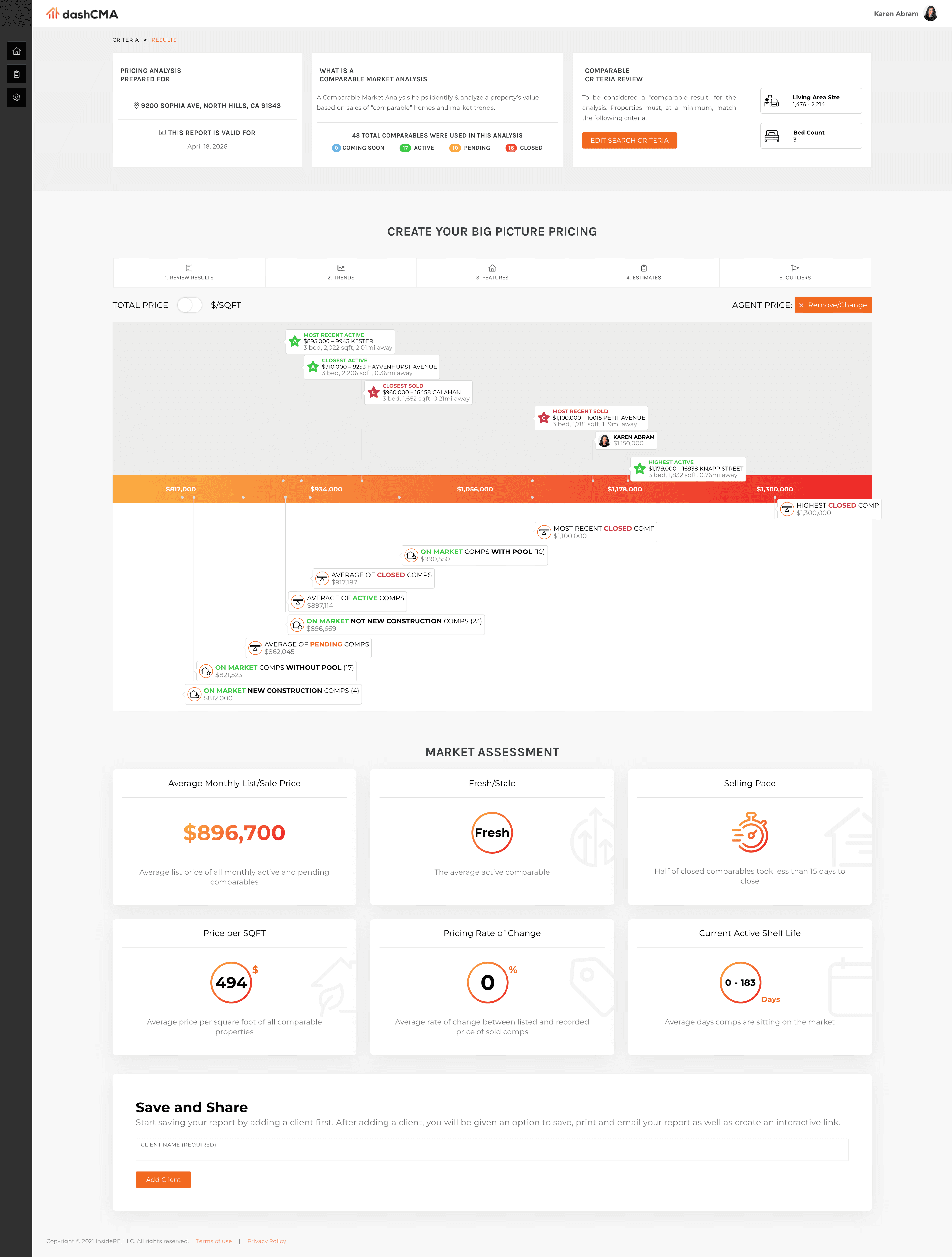
dashCMA: built from the first commit to an acquisition.
A founder arrived with a product idea and no engineering team. Danubio built dashCMA into a real-estate analytics product agents paid for and used every day: the web interface, the data and analytics pipeline behind it, the integrations, and the technical foundation an acquirer reviewed during diligence.
Product engineering end to end: frontend and backend architecture, the data and analytics pipeline, integrations, infrastructure, and the foundation reviewed in diligence
A solo founder with no internal engineers, a market that rewarded speed and punished sloppy software, and a product that had to feel built by a much larger team
Full-stack, end to end.
Web product engineering at Danubio covers the whole product, from the interface to the systems behind it.
Product UI and the workflow behind it
The screens people work in: forms, tables, multi-step flows, roles, and the state that moves between them. Built so the workflow still holds together as the product grows.
- Multi-step flows, role-aware views, and permissioned UI
- Dense data views: tables, filters, bulk actions, exports
- Accessibility and responsive behavior built in from the start
- Design partnership when the product needs it
Frontend architecture built to last
Component structure, state, data fetching, and rendering set up so the team can keep shipping into the codebase a year later.
- Product-grade React and Vue architecture
- State and data-fetching boundaries that hold up as the product grows
- Rendering and bundle decisions driven by real load
- A codebase the client team can own and extend
The backend, APIs, and integrations behind it
The web interface is one part of the work. Danubio can also own the services, data model, auth, and the integrations the product depends on.
- APIs and services in Laravel, Spring, Node, or Go
- Auth, roles, billing, and tenancy
- Integrations: payments, CRM, analytics, data and operational systems
- Deployment and the path from commit to production
Interfaces that stay fast with real data
Large datasets, live numbers, and reporting that has to be correct and fast. The query, the pipeline, and the screen are tuned together, because slowness is rarely just a frontend problem.
- Query and schema work so list and dashboard views stay fast
- Real-time and streaming data in the UI when the product needs it
- Reporting and export paths that hold up at volume
- Numbers that stay consistent across every view that shows them
Performance, and a maintainable codebase
Load time, interaction latency, and the cost of changing the product later, measured under production conditions.
- Core Web Vitals and interaction latency measured on real pages
- Profiling tied to where users and incidents actually are
- Tests and CI where they pay back
- Refactoring shipped incrementally through real features
Predictable releases, long after launch
Most of a product’s life is after launch. Danubio works best owning a web product across releases: predictable deploys, monitoring, and continued delivery.
- Predictable releases and safe, observable deploys
- Monitoring the team can act on
- Continued feature delivery after launch
- Work that can continue as a long-term engagement
A dashboard, a platform, an internal tool.
Three more web products. Same kind of work: the interface and the system behind it.
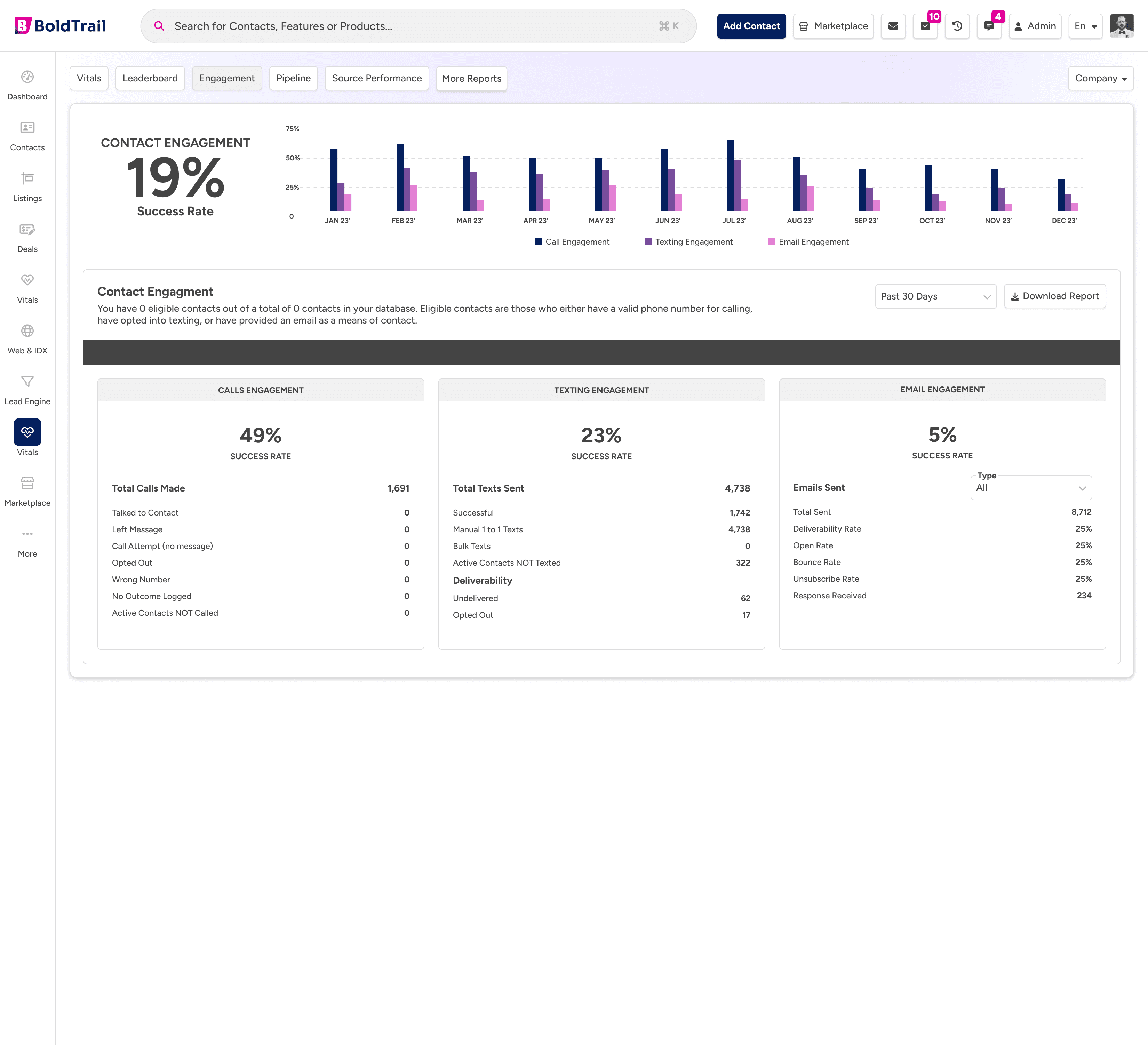
Real-time analytics for a 400,000-user CRM
A live KPI dashboard fed by a change-data pipeline on a CRM that could not be modified, with scores that stay consistent across every rollup the product shows.
Read case study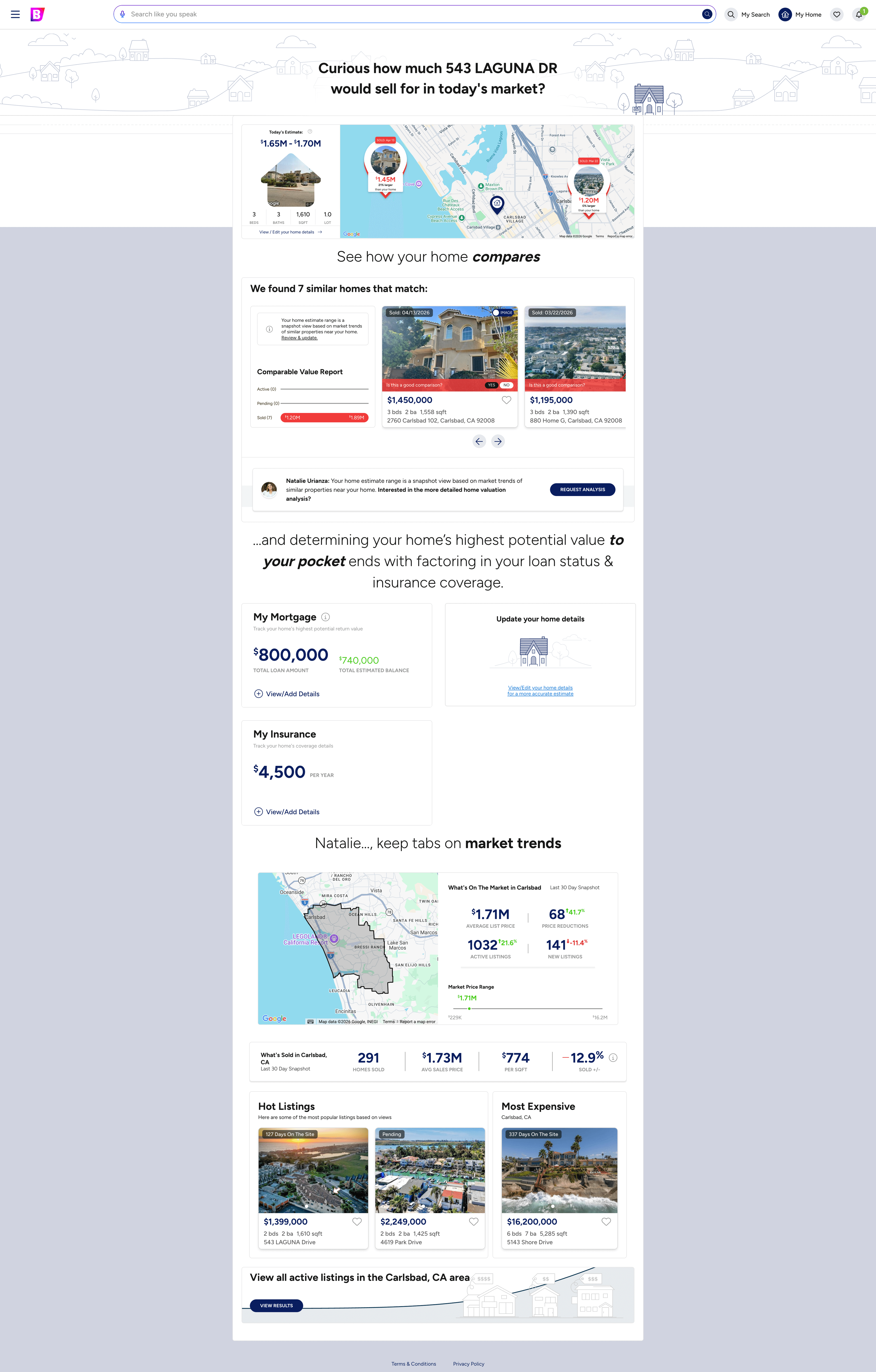
A multi-tenant platform rebuilt under live traffic
A live, multi-tenant real-estate platform re-engineered while customers kept using it, with tenant isolation and continuity held the whole way through.
Read case study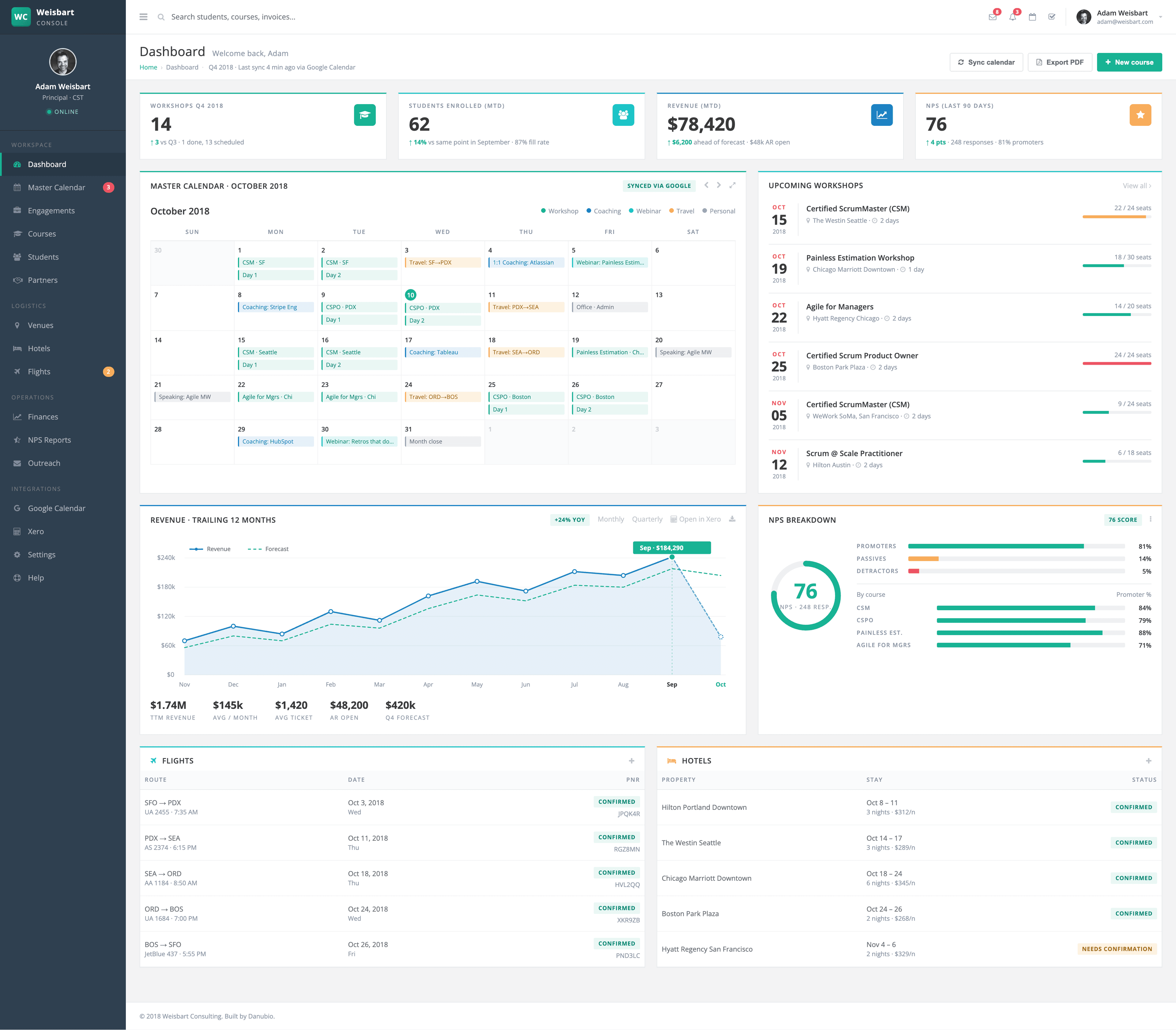
A back-office a one-person business runs on
A custom internal web platform that became the system its owner runs the whole consultancy from, day to day.
Read case studyThe same web engineering, across our three solutions.
Web product engineering is the work. Teams usually arrive through one of these.
Senior engineers who own the web product and the system behind it.
Engagements start as a first project and grow as the product evolves. The same engineers stay with the work over time.
Senior ownership
Senior engineers own the full web product: the data model, the APIs, the frontend, and the deploy. You hand the engineering over and get back to running the business.
Architecture for the long run
The structure is chosen so the team is still shipping into it a year later, and the product stays easy to change as it grows.
The team stays with the code
The engineers who build your product stay with it across releases. We have owned the engineering on one product for eight years, through an acquisition and several platform changes.
What we commit to ships
We take on work the team can own, and we tell you the truth about what is broken, including when we caused it. When we commit to a date, the work ships on it.
Two ways teams work with Danubio on a web product.
A web product engagement usually starts as a focused first project, a senior-led team of 2 to 4 engineers over roughly 6 to 12 weeks, and grows into a long-term engineering partnership as the product does.
Project Delivery
Where a web product starts. A scoped first build with senior engineering ownership of the architecture, the data model, and the surfaces users touch, shipped into a real production environment.
Explore Project DeliveryOngoing Engineering Partnership
When the first release lands, the same engineers stay on to grow the product. The people who set the architecture extend it, so scope grows while the context behind it stays in the room.
Explore Ongoing Engineering PartnershipWeb product engineering, answered
What kinds of web products do you build?
Danubio builds web products that carry real operational weight: SaaS applications, analytics dashboards, customer and partner portals, internal operations tools, and multi-tenant web apps, together with the backend services, data model, and integrations behind them. The common thread is web software with genuine engineering underneath, where the demanding parts are state management, data correctness, access control, and performance under load. A property platform serving thousands of brokerages and a focused internal tool for one team are both in scope, because both succeed or fail on the system beneath the interface. If the product is something a business runs on every day and depends on staying correct and available, it is the kind of web product Danubio takes on.
Do you cover the backend, or only the frontend?
Danubio covers the full web product, frontend and backend together: the React and TypeScript interface, the APIs and services behind it, the data model and database, and the third-party integrations the product depends on. A web product is only as dependable as the system it sits on, so a team that owns the interface without owning the data flow ends up debugging across a seam it cannot see. Taking responsibility for the whole stack is what lets the work hold up, because the frontend, the contracts it calls, and the data underneath all move together and are reviewed by the same engineers. When a product needs to share a backend with an existing system, Danubio builds against that platform instead of standing up a parallel one.
What do you build on?
The default stack is React and TypeScript on the frontend, a backend chosen to fit the product (Laravel, Spring, or Node), Postgres for relational data, and AWS for infrastructure. The stack follows what the product actually needs and what your team can own for years, so an existing Laravel codebase stays Laravel and a latency-sensitive service moves to where it earns its place. Danubio has shipped production systems across all of these, including multi-tenant platforms, search and analytics workloads, and event-driven pipelines. A default stack gives predictability; the actual choice is still made against the constraints of the product, the skills your team already has, and the cost of operating the system long after launch.
Can you join an existing product and team?
Yes. Many Web Product Engineering engagements run with Danubio engineers working directly inside your existing codebase, repositories, tools, and release cadence, alongside your internal team. In practice that means joining your standups, opening pull requests into your repo, following your review and deployment process, and sharing ownership boundaries agreed up front so there is no ambiguity about who carries what. The aim is to add senior engineering capacity to how you already ship, so the team gets faster without absorbing a new process or a separate vendor workflow. When an engagement starts on a greenfield piece instead, Danubio sets up the codebase and CI so your team can take it over cleanly later.
Do you build new web products, or improve existing ones?
Both, and the distinction mostly changes how the engagement is framed. A greenfield build runs as a new-product engagement, where the early architecture, data model, and core technical decisions are chosen so the first version ships fast and still holds up as the product grows. Strengthening, scaling, or modernizing an existing web app runs as modernization work, done incrementally under live traffic so the product keeps serving customers throughout. Web Product Engineering is the underlying discipline in either case: senior engineers owning the frontend, backend, and data as one product. It applies whether the codebase is on its first commit or its tenth year, and many engagements move from one mode to the other as the product matures.
How does an engagement start?
Most engagements start as a focused first project: a senior-led team takes one meaningful piece of the product into production, end to end, instead of ramping slowly across the whole codebase. That first scope is chosen so it delivers something real on its own, a launch, a rebuild of a fragile area, or a feature the roadmap is waiting on, while giving both sides a low-risk way to build trust. From there the relationship tends to grow into a longer partnership as more of the product leans on the work and the same engineers carry the context forward. Typical start time for an initial engagement is one to two weeks, depending on scope and team availability.
Deeper on this work
Have a web product that needs real engineering?
Bring a web product, dashboard, SaaS platform, portal, or internal tool. We can talk through what it needs.