AI-powered property search, shipped to 400,000 agents in five months.
Inside Real Estate had committed publicly to launching an AI-powered home search across BoldTrail and CORE Home in five months. Promising models existed; the production search platform around them did not. Danubio became the engineering team behind the launch.
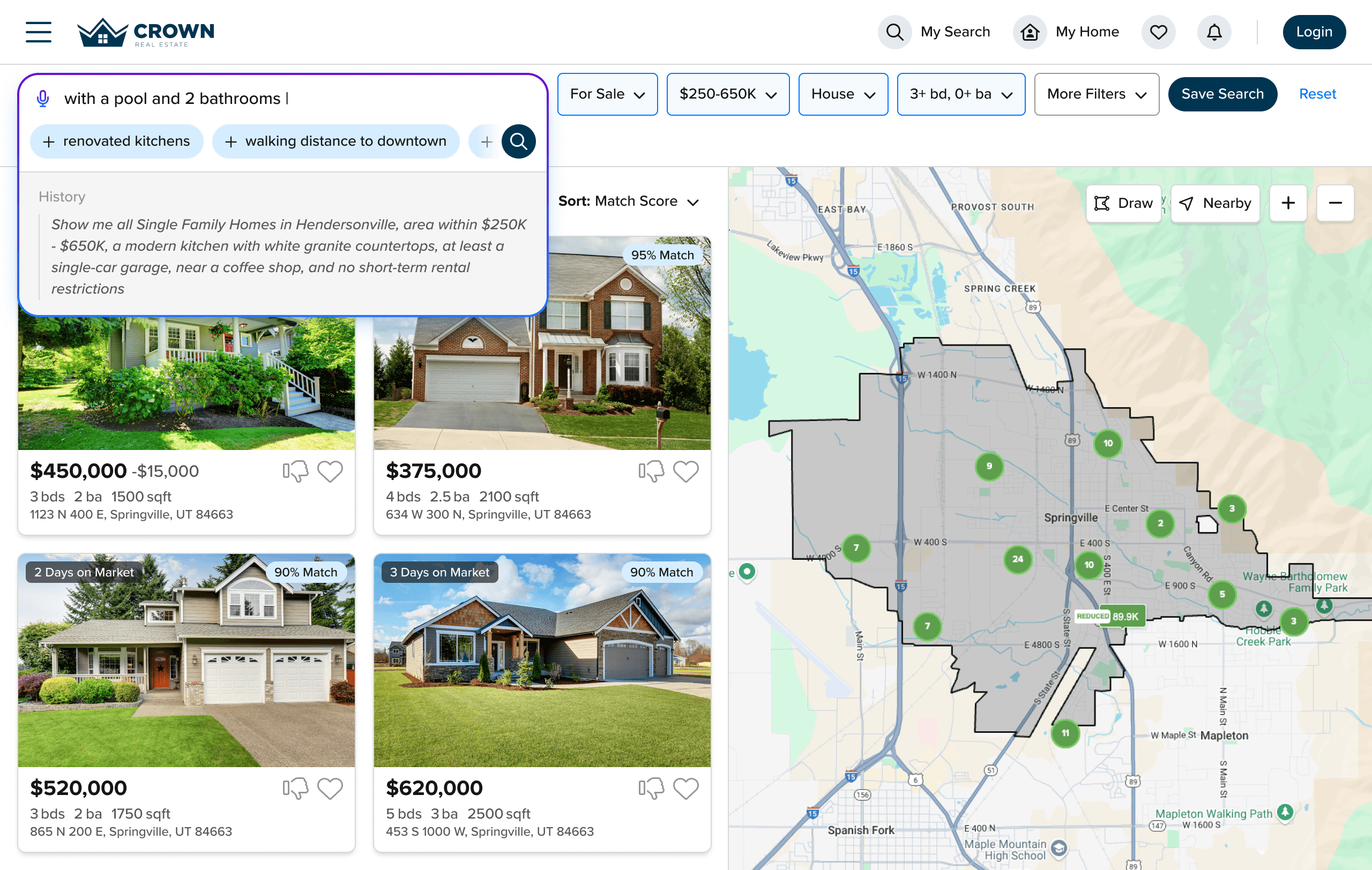
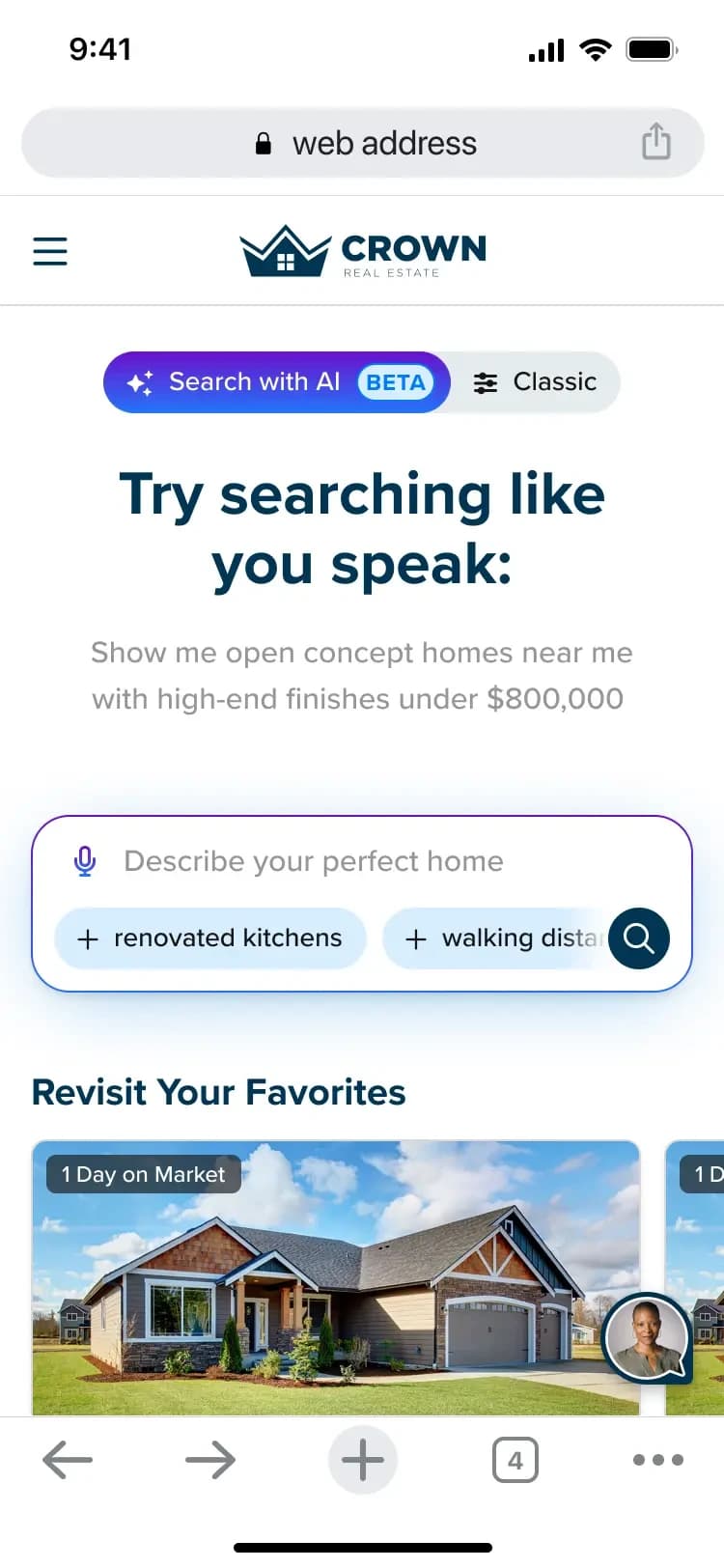
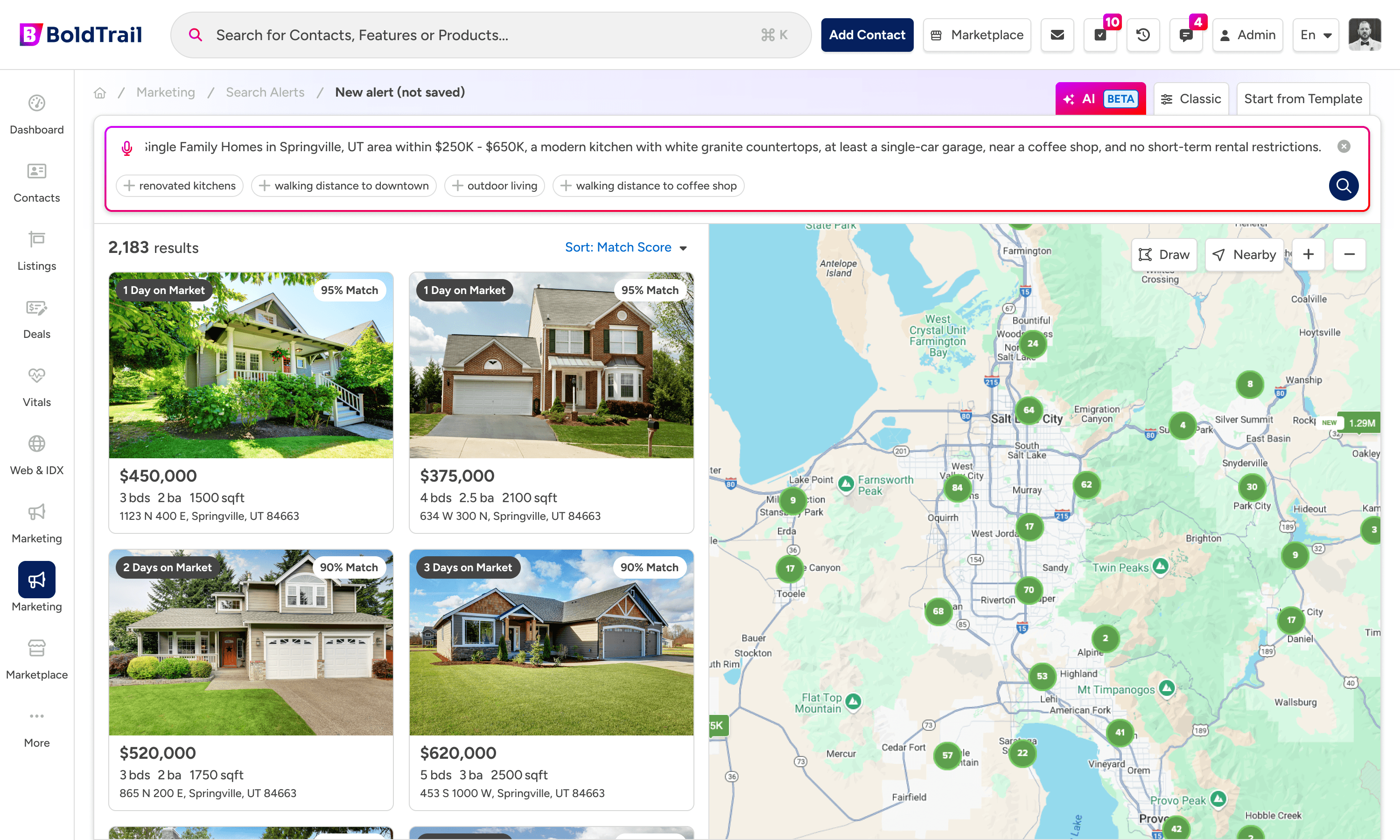
From filter checkboxes to plain English. The same buyer intent, expressed the way buyers actually talk.
The situation
In March 2025, Inside Real Estate acquired ListAssist, a small team with strong natural-language and computer-vision models for property search. Within weeks they had committed publicly to turning that capability into HomeSearch AI, a flagship search experience embedded across BoldTrail (the agent CRM serving roughly 400,000 agents) and CORE Home (the branded consumer portal). Launch was set for the summer.
The constraint was the platform around the models. Conversational search at production scale needed a search service that could carry both classic and AI queries on one contract, an alert pipeline running at 160 million emails a month that understood intent rather than keywords, voice as a first-class input, dormant-lead reactivation built on the same primitives, and an A/B framework so IRE could keep tuning after launch. None of that existed yet.
Danubio took ownership of the engineering. We had been the engineering partner behind CORE Home since the earlier rebuild, so the surfaces, the data shapes, and the operational realities were already familiar. We expanded the team for the push, on top of the engineering already working on CORE Home and BoldTrail. The August 18, 2025 launch held.
A new search service, classic and AI behind one API
BoldTrail and CORE Home both needed AI-powered search, and both still needed traditional filter-based search to keep working for the agents and consumers already using it. Bolting AI on as a second system would have meant two query paths, two ranking layers, two failure modes, and two chances to drift. The right answer was one search service that owned both, served from a single contract.
Danubio built that service from scratch in Java and Spring so one search contract could carry both classic filters and AI-driven queries reliably under launch load, with mature observability and tracing, and the kind of predictable performance Inside Real Estate needed from a core product service.
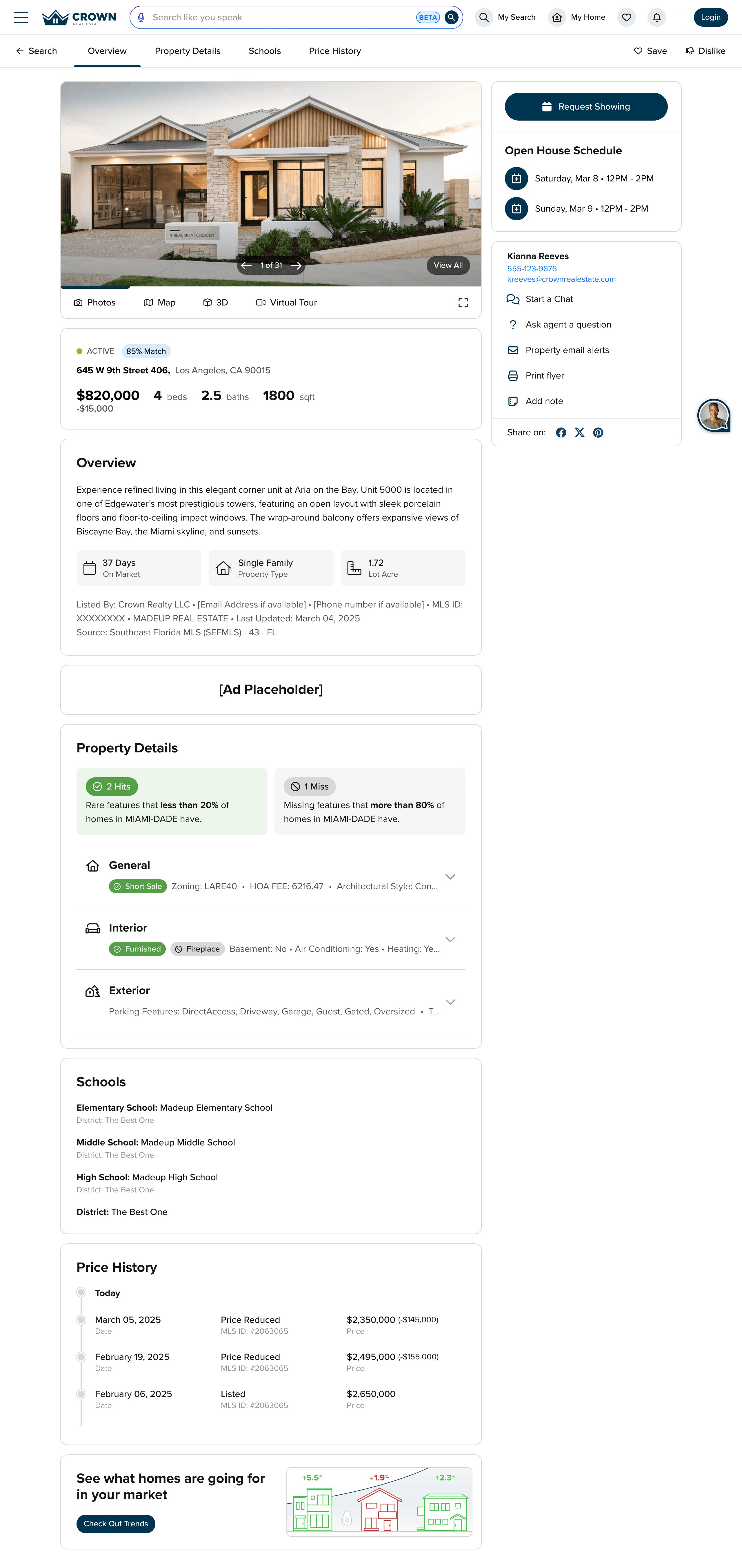
Natural language as the default input, typed or spoken
Buyers do not search for homes the way an MLS schema thinks about homes. They say "3 bedroom home with a pool under $600k" or "modern home with lots of light", whether typed or spoken. The win was making that the default input, not a clever extra mode. That meant a query pipeline that extracts intent, normalizes it against the underlying listing data, and falls through cleanly to classic filters when an intent slot does not resolve, all without the user noticing they had crossed a boundary. Voice runs through the same pipeline, so the behavior is identical whichever way the buyer asks.
Alerts, ranking, and dormant-lead reactivation at platform scale
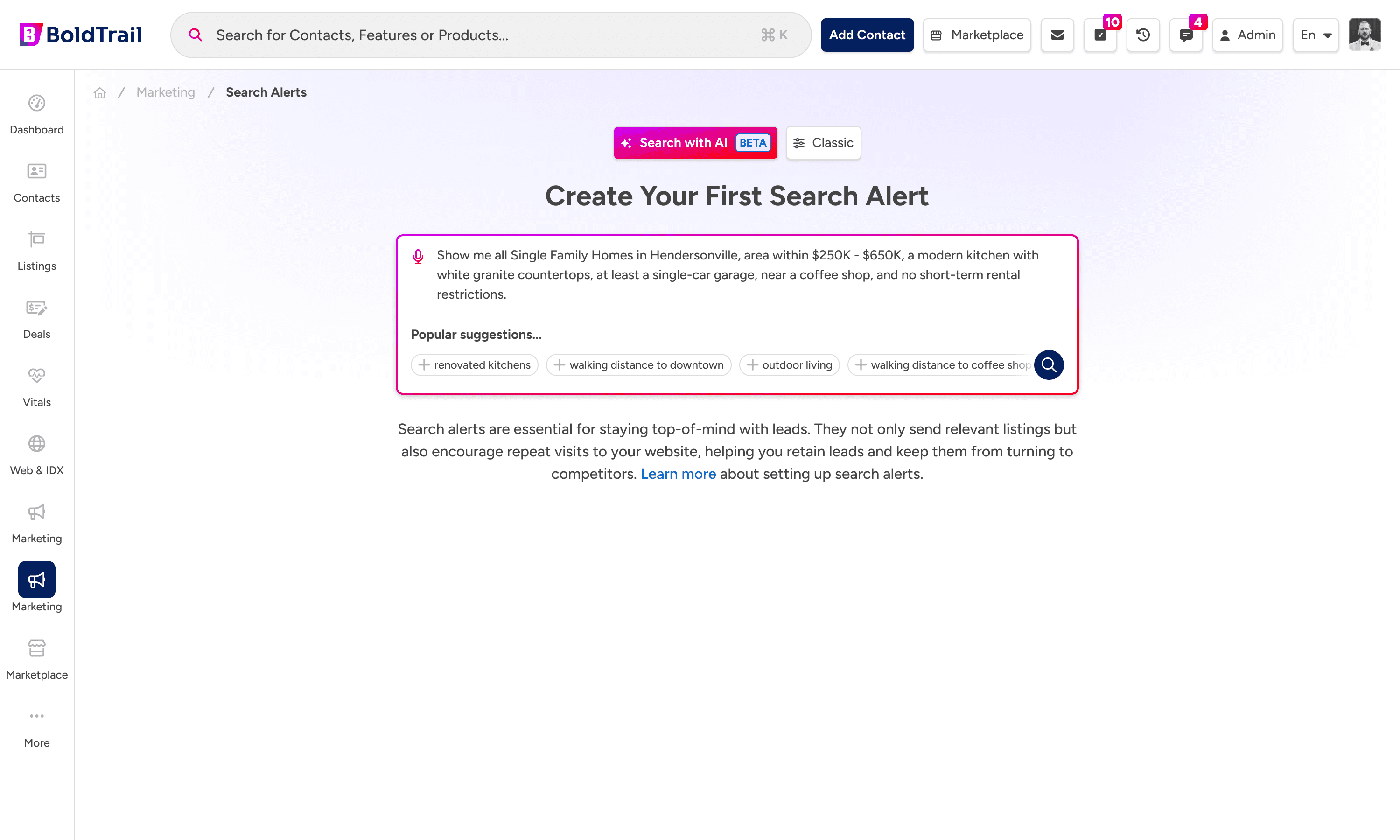
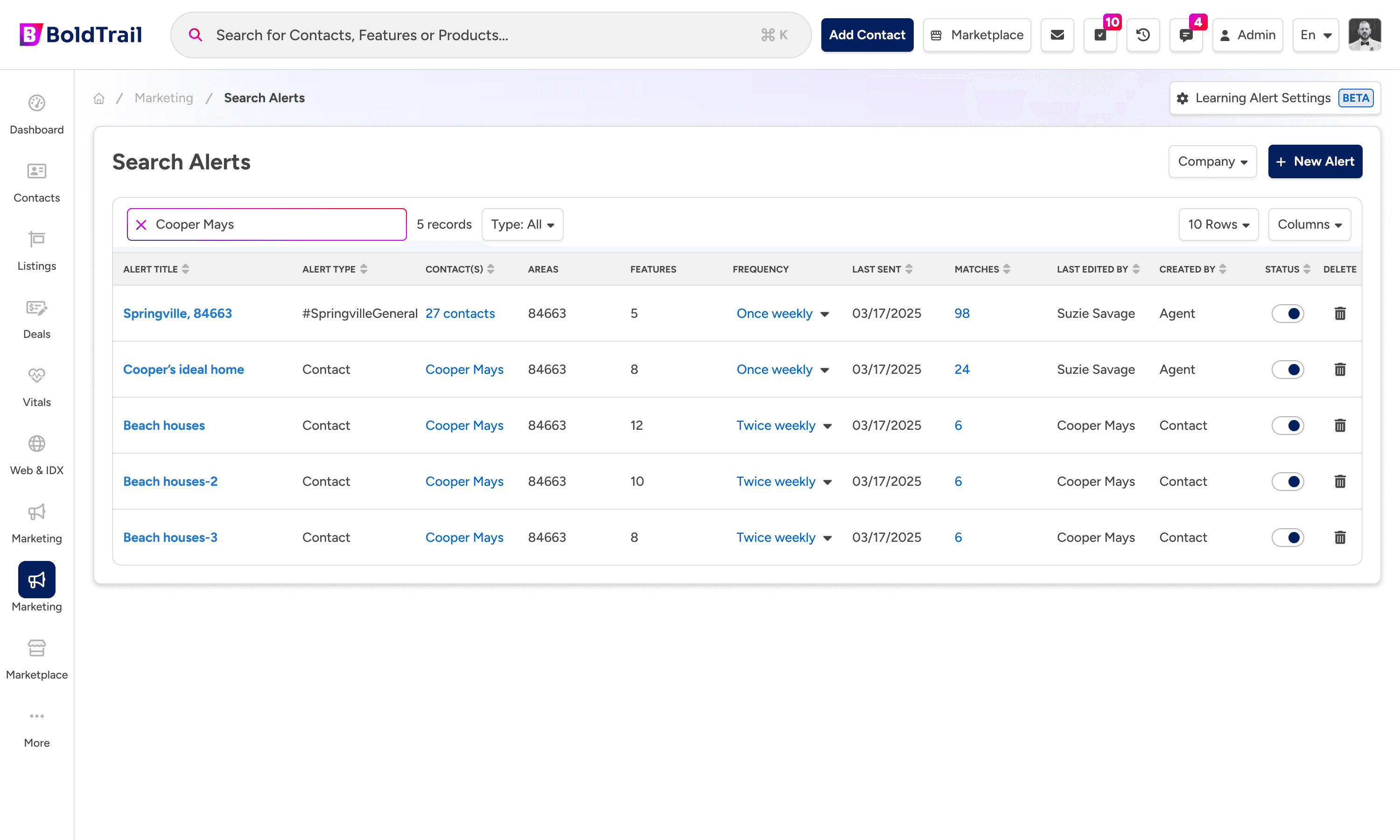
Search alerts are how BoldTrail keeps agents in front of their pipeline. The platform sends roughly 160 million of them every month, and each one has to choose what to send, when to send it, and who it is for. We rebuilt that pipeline on top of the new search service so that alerts speak the same intent language as the live search, and so that ranking and timing decisions are made in one place rather than scattered across email templates and CRM jobs.
Dormant-lead reactivation runs on the same primitives. When a lead has gone quiet, the system uses their historical intent to decide whether anything new on the market is worth a re-engagement, and surfaces it to the agent at the moment it is most likely to land. The whole stack sits behind an A/B framework so the IRE product team can keep tuning the model layer, the ranking weights, and the alert copy after launch without redeploys.
From acquired models to a flagship launch in five months
Inside Real Estate acquires ListAssist and its AI search models. Danubio takes ownership of the engineering for HomeSearch AI across BoldTrail and CORE Home.
HomeSearch AI live across BoldTrail and CORE Home. Sustained traffic at around a thousand requests per second from day one.
Danubio is still on the platform with Inside Real Estate, expanding HomeSearch AI and tuning the model, ranking, and alert layers through the A/B framework we shipped.
Acquisition close to public launch across BoldTrail and CORE Home, on the date Inside Real Estate had committed to.
- 5–10x lead engagement on the new search platform among early adopters
- 12.5x more agent–consumer conversations on CORE Home + HomeSearch AI
- 17% more listings viewed per session
- 160M intent-driven search alerts shipped per month
“HomeSearch AI has elevated both our client experience and agent productivity. Our buyers love the intuitive, personalized home search that adapts to their preferences in real time, making their journey faster and more enjoyable.”
HomeSearch AI was the most consequential launch of our year, and the engineering had to hit a date our customers had already heard. Danubio took ownership of it across BoldTrail and CORE Home, scaled the team for the push, and delivered on the date we had committed to. After years of running engineering alongside us, we knew this one would land.





Frequently asked questions
What did Danubio build in five months?
In five months, Danubio built the production search platform around AI models that already existed. Inside Real Estate had committed publicly to launching AI-powered home search across BoldTrail and CORE Home on that timeline; the promising models were there, but the production system to serve them, at scale and reliably to hundreds of thousands of agents, was not. Danubio became the engineering team behind the launch and hit the date. The work was the hard part of shipping AI: the search and serving infrastructure, the data pipelines feeding it, the ranking and query handling, and the reliability and fallbacks needed to put a model-backed feature in front of real users. It ran on OpenSearch, Kafka, Spring, and SageMaker on AWS, with a Vue front end.
How many agents use HomeSearch AI?
HomeSearch AI shipped across two products, BoldTrail and CORE Home, to roughly 400,000 real-estate agents. Launching to that many users on a fixed five-month timeline is what made the engineering demanding: an AI search feature at that scale has to hold up under real query volume, return results fast enough to feel usable, and degrade gracefully when a model is slow or wrong, all from day one of a public launch. Danubio built the production platform to meet that bar and hit the committed date. The serving stack, OpenSearch, Kafka, and Spring with SageMaker on AWS, was chosen to handle search and real-time data at the volume that 400,000 agents generate, with a Vue front end as the surface they interact with.
What does the search platform run on?
The HomeSearch AI search platform runs on a search and serving stack built with OpenSearch for search and retrieval, Kafka for the real-time data pipeline, Spring and Java for the services, and SageMaker on AWS for model serving, with a Vue front end and Python in the data and model tooling. The combination reflects what an AI search feature actually needs in production: fast, relevant retrieval at scale, a steady flow of fresh data into the index, reliable model serving, and a responsive interface. Danubio built this platform around AI models that already existed, turning them into a feature that shipped across BoldTrail and CORE Home to roughly 400,000 agents in five months. The architecture choices followed directly from the launch target: scale, latency, and a fixed date.
Putting an AI feature into a real product?
Danubio works with founders and engineering leaders who need a senior team to own the platform around the model, the surfaces it ships into, and the deadline it has to land on.