Vue development for products that matter.
Danubio builds, ships, scales, and modernizes Vue applications. Real-time data UIs, analytics dashboards, AI-powered product surfaces, and the long-running interfaces that need to stay responsive under continuous load.
One team, across new builds, modernization, and the years after.
What Vue is good at.
Vue earns its place when reactivity, progressive adoption, and a tight component model matter more than ecosystem breadth. These are the project shapes where Danubio reaches for it.
Reactivity that just works.
Vue's fine-grained reactivity model makes UI state changes predictable. Components update only when their inputs change, without manual subscription management or render-tuning to claw back performance.
Progressive adoption into existing apps.
Vue drops into a slice of an existing application and grows from there. New features ship in Vue alongside legacy code, so modernization happens incrementally instead of as a big-bang rewrite.
Single-file components keep teams aligned.
Template, script, and styles co-located in one .vue file. Component contracts are easier to read, easier to onboard onto, and easier to refactor as the codebase matures.
Mature ecosystem with strong defaults.
Pinia for state, Vue Router for navigation, Nuxt for full-stack, Vite for builds. The first-party answers cover most of what serious applications need without bolting on third-party scaffolding.
The products Danubio builds with Vue.
The kinds of products Vue is most at home with, drawn from the work we ship across data-intensive, real-time, and AI-driven interfaces.
Real-time data dashboards.
UIs that update at sub-second cadence, render thousands of points without janking, and stay responsive under continuous load. Vue's reactivity model is at home in this kind of work.
AI-powered product surfaces.
Search, recommendations, ranking. UIs that present results from machine-learning systems with the latency and clarity that production AI demands. The Vue side of an AI product.
B2B and vertical SaaS frontends.
Workspace-aware UIs, role-based interface states, multi-tenant control panels. Vue handles the state choreography these systems need without ceremony.
Internal tools and operations platforms.
Internal dashboards, fulfillment workflows, reporting, and role-based access. Often replaces a legacy admin built years ago in something less maintainable.
What Danubio has shipped in Vue.
Real-time analytics handling 20,000 requests a second and AI-powered product search, both shipped for an enterprise PropTech platform.

AI-powered property search, shipped to 400,000 agents in five months
Inside Real Estate committed publicly to launching an AI-powered home search across BoldTrail and CORE Home in five months. Promising models existed; the production search platform around them did not. Danubio became the engineering team behind the launch.
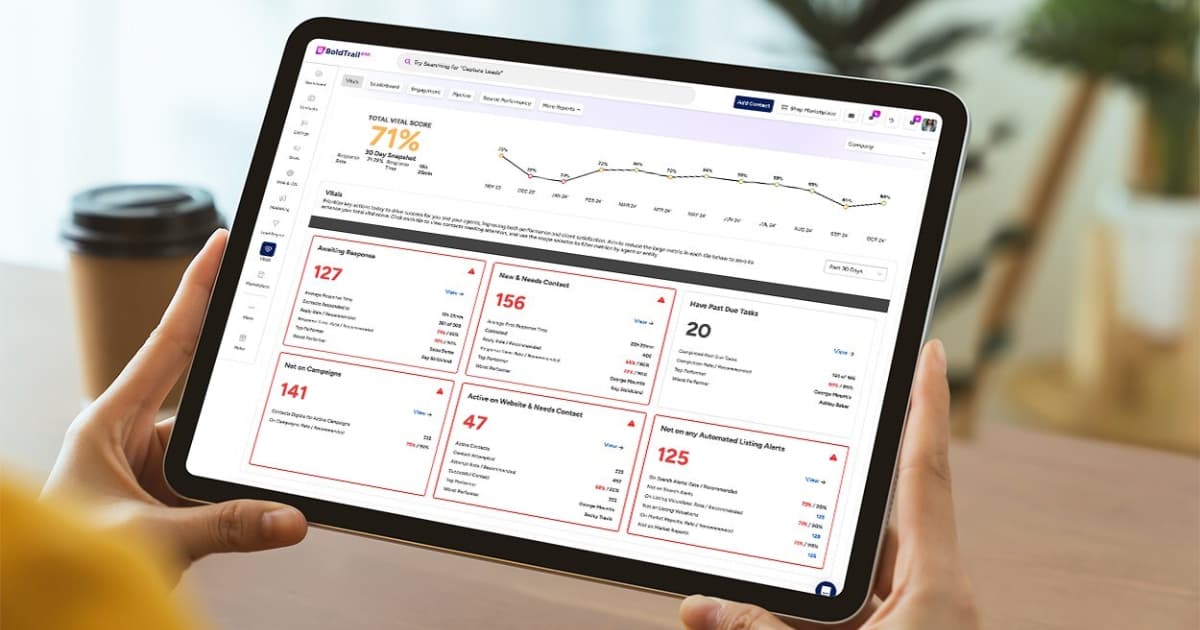
Real-time performance analytics dashboard handling 20k req/s
Inside Real Estate launched Vitals, a daily performance dashboard for every brokerage on BoldTrail. Danubio designed and built the real-time event tracking, scoring, and aggregation service behind it, end-to-end.
Current with the modern Vue ecosystem, not just the framework.
What the engagements actually use, end to end. Versions track current; we work on Vue 3 with the Composition API and keep older codebases moving toward it.
Application core
- Vue 3, Composition API
- TypeScript, strict mode
- Vite and Turbopack
- Vitest and Vue Test Utils
- Playwright for end to end
UI and design systems
- Tailwind CSS
- Headless UI patterns
- shadcn-vue and Radix Vue
- Design tokens and theming
- Animation primitives
State and data
- Pinia for state
- VueUse composables
- TanStack Query for Vue
- Vee-Validate forms
- Zod schema validation
Operations
- Nuxt for SSR and routing
- Vue Router
- Vercel and Cloudflare Pages
- Sentry and Web Vitals
- Accessibility tooling (axe-core)
The way Danubio approaches Vue work.
Principles that shape every Vue engagement, drawn from the real-time and data-heavy UIs the team has shipped.
Senior-led, every engagement.
The engineers writing Vue for a Danubio client have shipped Vue into production for years, on real-time dashboards and data-heavy product UIs. No training-on-the-job at the client's expense, and no reactivity pitfalls learned on your production data.
Composition API as the default.
New work uses the Composition API and the script setup syntax. Props and emits are typed and explicit, so each component states what it takes and what it fires, and state ownership stays legible as the app grows.
Measure under live data.
Performance work follows real metrics: render profiling, Web Vitals, and live throughput on the dashboards Vue tends to power. The numbers come before opinions about what is slow.
Typed from template to store.
TypeScript through defineProps, typed Pinia stores, and typed API clients, with schema validation on data crossing trust boundaries. The compiler catches what would otherwise surface as a runtime template error.
Tests as a ratchet.
Unit logic with Vitest, component tests with Vue Test Utils, end-to-end with Playwright. Coverage moves up over the engagement, not down.
Vue, answered
When would you choose Vue over React?
Both are excellent, and the choice usually follows the team and the product rather than a technical winner. We reach for Vue when a team already knows it, or for data-heavy, real-time UIs where its reactivity model and single-file components keep fast-updating views simple. For most greenfield product work, either framework is a sound default.
Is Vue a good fit for real-time, data-heavy dashboards?
Yes. Vue's reactivity model handles UIs that update at sub-second cadence and render large datasets without janking. We have shipped Vue dashboards that stay responsive under continuous load on an enterprise analytics platform handling 20,000 requests a second.
Composition API or Options API for a new Vue app?
Composition API, with the script setup syntax. It keeps state ownership and typing explicit as the app grows, composes logic cleanly across components, and is where the ecosystem is heading. We keep older Options API codebases working and migrate them progressively rather than rewriting.
A Vue project on the table?
New build, real-time data UI, AI product surface, performance work, or a progressive migration off legacy frontends. Whatever stage the product is at, we can talk through it.