React Native for products that matter.
Danubio builds React Native applications as part of teams already shipping web. The same engineers, the same component model, and the cross-platform discipline that keeps mobile from becoming a separate org with a separate pace.
One team across web and mobile.
What React Native is good at.
React Native earns its place when shipping mobile alongside web matters more than squeezing every cycle out of a fully native stack. These are the project shapes where Danubio reaches for it.
Cross-platform from one codebase.
iOS and Android shipped from the same repo by the same engineers. The investment in component design pays off twice, and feature parity stops being an organizational coordination problem.
Shared mental model with React web.
Same component model, same testing tools, mostly the same engineers. A web team can extend to mobile without onboarding a separate paradigm or hiring a separate org.
Native performance for product-shaped work.
The new architecture (Fabric, TurboModules) closes the gap to native for the kinds of features most apps actually need. Where it does not, escape hatches into Swift or Kotlin are well-trodden and undramatic.
OTA updates without app-store latency.
EAS Update and CodePush ship JS-side fixes in hours rather than the days an app store review takes. Critical bugs and copy changes do not have to wait on Apple's queue.
The mobile apps Danubio builds with React Native.
The kinds of mobile products React Native is most at home with, drawn from the work we ship as part of broader product engagements that span web and mobile.
Multi-tenant mobile companions to SaaS web apps.
Brokerage agents in the field, sales teams on the road, healthcare workers between sites. Apps that mirror or extend a web product the same users are already on every day.
Field-facing operational apps.
Inspections, route optimization, dispatch, on-site reporting. Mobile-first work that web cannot replicate, where camera, GPS, and offline-capable sync are first-class concerns.
Customer-facing self-service apps.
Account management, scheduling, document handling, communication. The mobile face of an existing customer portal, designed for the moments people actually reach for their phone.
Cross-platform consolidations and migrations.
Move from Cordova or Ionic to React Native, consolidate split native iOS and Android codebases into one, or extend an existing React web team to mobile without standing up a new org.
What Danubio has shipped in React Native.
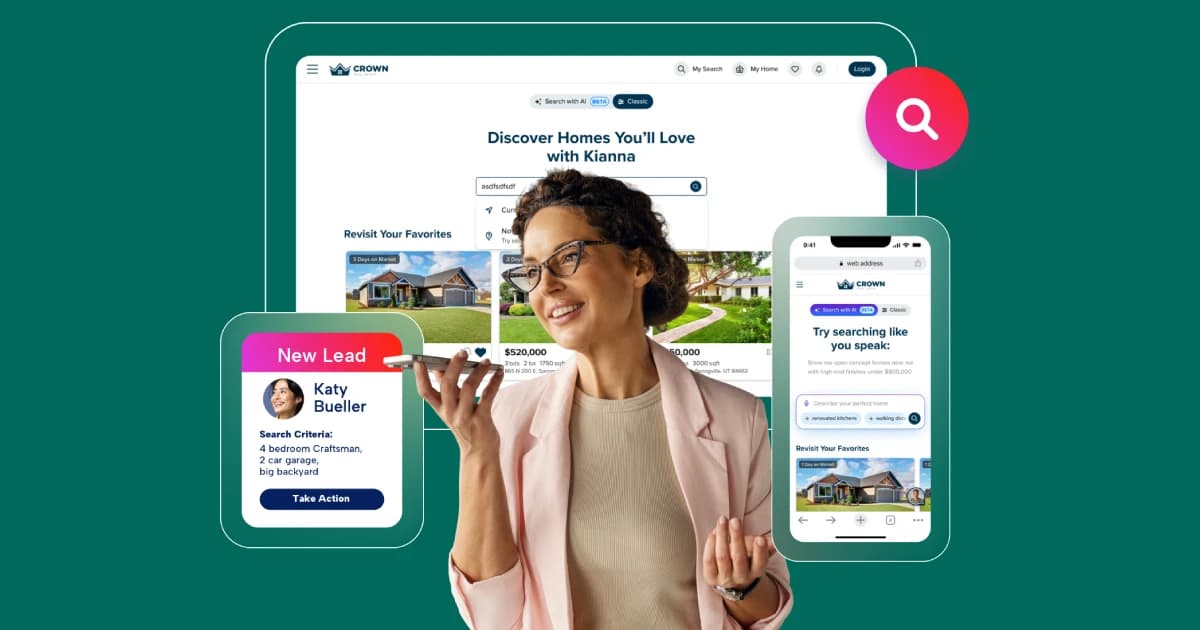
The React Native side of a multi-tenant brokerage platform serving 5,000+ tenants, rebuilt and shipped alongside the web app for thousands of agents working in the field.
Current with the modern React Native ecosystem, not just the framework.
What the engagements actually use, end to end. Versions track current; we work on the latest stable React Native with the new architecture and keep older codebases moving toward it.
Application core
- React Native (latest stable)
- New Architecture (Fabric, TurboModules)
- TypeScript, strict mode
- Expo and EAS
- Hermes JS engine
Navigation and state
- React Navigation
- TanStack Query
- Zustand and Jotai
- React Hook Form
- Zod schema validation
UI and animations
- NativeWind (Tailwind for RN)
- Reanimated 3
- React Native Gesture Handler
- Native module bridges
- Native iOS / Kotlin escape hatches
Operations and delivery
- EAS Build and Submit
- EAS Update and CodePush
- Sentry for crashes and traces
- App Store Connect and Play Console
- Detox and Maestro for end-to-end
The way Danubio approaches React Native work.
Principles that shape every React Native engagement, drawn from shipping mobile alongside web on production products.
Senior-led, every engagement.
The engineers writing React Native for a Danubio client are the engineers who have shipped React Native into production for years. No training-on-the-job at the client's expense, and no platform-specific bug found for the first time in your store release.
One team across web and mobile.
The engineers writing React Native are the same engineers writing React on the web. Component patterns, state management, and testing carry across, and mobile does not become a separate org with its own cadence.
Native escape hatches when warranted.
When JS-side React Native is the wrong tool for a feature (heavy animation, custom rendering, OS-level integration), we drop into Swift or Kotlin without ceremony. The bridge is a tool, not a religion.
OTA discipline.
JS-side updates ship through EAS Update or CodePush in hours when something needs fixing. Binary updates ship the slow way for changes that genuinely require it. The team knows which is which.
Tests on real devices.
Detox and Maestro for end-to-end on physical hardware in CI, Vitest for component logic, and crash analytics tied to release cohorts. Coverage moves up over the engagement, not down.
React Native, answered
When is React Native the right choice for a mobile app?
React Native fits when you want one codebase across iOS and Android, the app shares logic and APIs with a web product, or the team is already strong in React. It is a strong default for product and companion apps. For apps built around heavy device-specific or high-performance native features, fully native can still be the better call.
Does React Native share code with our web app?
It shares the React component model, most of the engineers, the testing tools, and the business logic and API clients, though the UI layer stays platform-specific. That overlap is why one team can cover web and mobile. We have built the React Native side of a multi-tenant platform serving 5,000+ tenants, on the same APIs and release quality as the web.
How do you handle native modules and app-store releases?
We write native modules when a feature needs them and otherwise lean on the mature React Native ecosystem, and we own the full release path: build pipelines, code signing, store submission, and staged rollouts on both platforms. The app ships on the same engineering discipline as the rest of the system.
A React Native project on the table?
New mobile build alongside an existing web product, cross-platform migration off Cordova or split native codebases, performance work on a slow JS bridge, or an EAS Build pipeline rebuild. Whatever stage the app is at, we can talk through it.