Spring development for products that matter.
Danubio builds, scales, and operates Spring services in production. High-throughput APIs, real-time data pipelines on Kafka, AI-adjacent search infrastructure, and the JVM operational discipline that keeps these systems honest at scale.
One team, across new builds, modernization, and the years after.
What Spring is good at.
Spring earns its place when throughput, type safety, and decades of JVM operational maturity matter more than ecosystem novelty. These are the project shapes where Danubio reaches for it.
Throughput patterns that hold up under load.
Spring WebFlux for reactive workloads, Spring MVC for conventional services, Spring Kafka for streaming. The framework has been at the core of financial systems handling millions of TPS for years; the patterns transfer to any high-throughput backend.
Type safety and tooling that scale with the codebase.
Strong typing across hundreds of thousands of lines, compile-time guarantees, and refactoring tooling that actually works. JVM-class IDE support and the language's deep profiling story make Spring codebases ones engineering leaders can plan around.
A mature operational story.
JVM tuning, profiler attach, structured logging, distributed tracing, JMX metrics. The operational primitives are decades old and well-understood, and on-call engineers know what to do at 3am.
The Spring ecosystem covers backend reality.
Security, data, cloud, batch, integration, OAuth, scheduled work, observability. The first-party answers cover most of what serious backend systems need, without bolting on third-party scaffolding around them.
The services Danubio builds with Spring.
The kinds of backend services Spring is most at home with, drawn from the production systems we build, scale, and keep running.
Real-time data ingest and processing.
Kafka consumers, stream-processing topologies, sliding-window aggregations. Systems where data arrives continuously and the dashboards need to reflect it within seconds, not minutes.
High-throughput public APIs.
Marketplace endpoints, search APIs, ranking services, partner integrations. Endpoints where p99 latency and throughput targets drive the architecture, not afterthoughts that surface in the first incident.
AI and ML retrieval infrastructure.
Search indices, embedding stores, ranking pipelines, ML inference orchestration. The Spring side of an AI product, where deterministic latency matters as much as model quality.
Enterprise integration backbones.
Microservice meshes, message-driven event flows, service-to-service authentication, distributed transactions. The plumbing that holds large engineering organizations together as the system grows.
What Danubio has shipped in Spring.
A real-time analytics dashboard sustaining 20,000 requests per second and the AI-powered property search infrastructure behind it, both shipped for an enterprise PropTech platform.
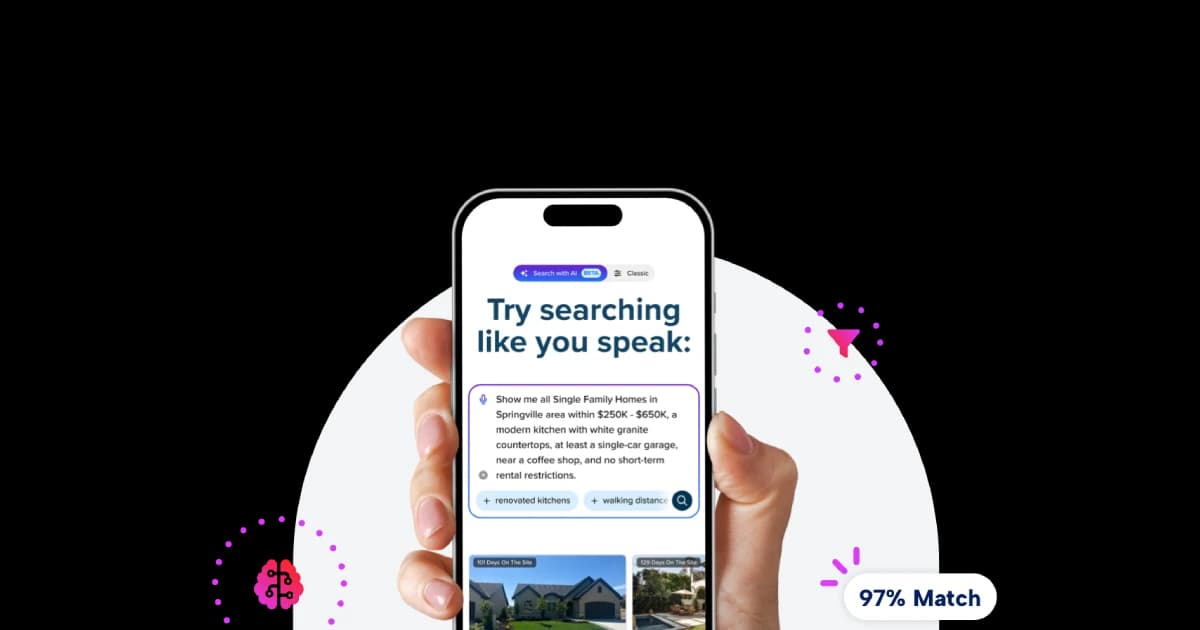
AI-powered property search, shipped to 400,000 agents in five months
Inside Real Estate committed publicly to launching an AI-powered home search across BoldTrail and CORE Home in five months. Promising models existed; the production search platform around them did not. Danubio became the engineering team behind the launch.
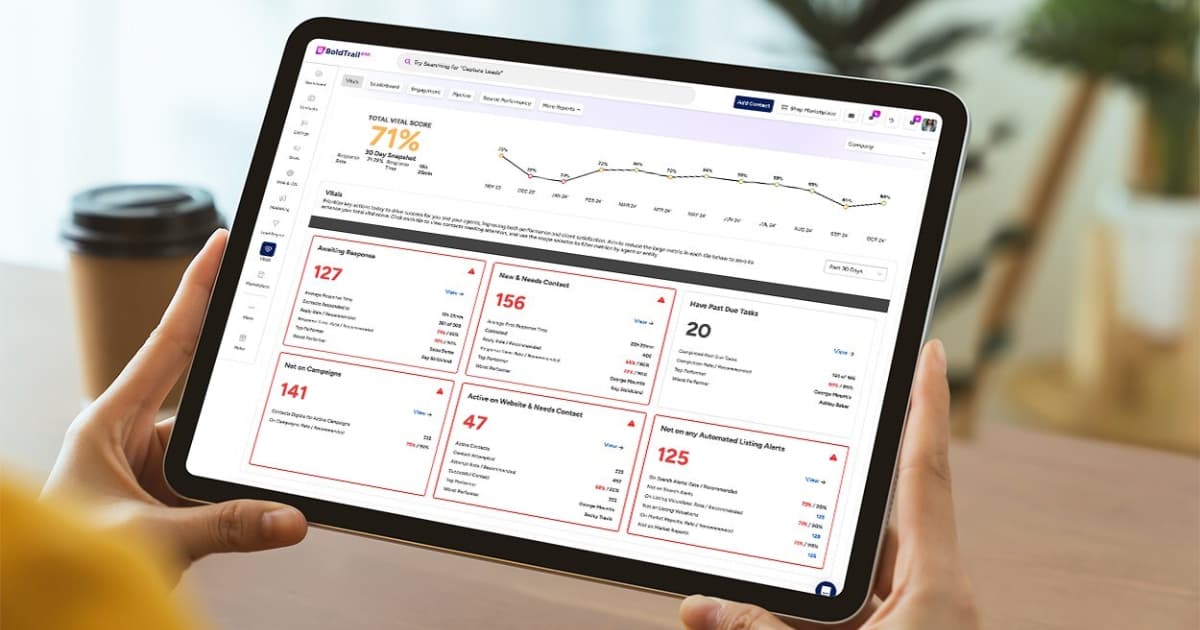
Real-time performance analytics dashboard handling 20k req/s
Inside Real Estate launched Vitals, a daily performance dashboard for every brokerage on BoldTrail. Danubio designed and built the real-time event tracking, scoring, and aggregation service behind it, end-to-end.
Across the modern Spring ecosystem, not just the framework.
What the engagements actually run, end to end. Versions track current; we work on Spring Boot 4 and modern Java releases and keep older codebases moving toward them.
Application core
- Spring Boot 4, Spring Framework 7
- Java 21 / 25
- Kotlin where it earns its keep
- Maven and Gradle
- JUnit 5 and Testcontainers
Web and API
- Spring MVC and WebFlux
- Spring Security and OAuth2
- OpenAPI / Swagger
- Resilience4j
- gRPC where it fits
Data and messaging
- Spring Data JPA and Hibernate
- Spring Data MongoDB
- Spring Kafka
- Spring AMQP
- Flyway and Liquibase
Operations and observability
- Spring Actuator
- Micrometer
- OpenTelemetry tracing
- Prometheus and Grafana
- JVM tuning and profiling
The way Danubio approaches Spring work.
Principles that shape every Spring engagement, drawn from the backend systems the team has shipped at scale.
Senior-led, every engagement.
The engineers writing Spring for a Danubio client are the engineers who have shipped Spring services into production for years. No training-on-the-job at the client's expense, and no architectures cargo-culted from a tutorial.
Architecture before frameworks.
Pick the Spring modules to fit the workload, not the workload to fit Spring's defaults. WebFlux versus MVC, Kafka versus SQS, JPA versus Spring Data JDBC. The choice is workload-driven, not pattern-driven.
Profile before optimizing.
Production performance work follows JVM profilers, distributed traces, and database query plans. Microbenchmarks and gut feels stay out of the codebase until the data agrees with them.
Type-safe at every layer.
Strong typing from REST contracts down to the database. Records, sealed interfaces, and Kotlin where it earns its keep. The compiler catches what tests do not.
Tests as a ratchet.
JUnit 5, Mockito sparingly, integration tests against real Postgres and Kafka in containers. Coverage moves up over the engagement, not down.
Spring, answered
When is Spring the right backend choice?
Spring fits backends that have to stay robust under real load: high-throughput services, event-driven systems, complex domain logic, and JVM platforms where reliability and observability matter. We have built a Spring service handling 20,000 requests a second behind a live analytics product.
Spring MVC or WebFlux?
Spring MVC for most request/response backends, where the blocking model is a fine fit and the code stays simple. WebFlux when the workload is genuinely I/O-bound at high concurrency and back-pressure matters, such as streaming or fan-out to many slow downstreams. We choose on the load profile, since reactive code costs more to write and debug.
Can you build a high-throughput, real-time service on Spring?
Yes. We designed and built the real-time event tracking, scoring, and aggregation service behind a performance dashboard handling 20,000 requests a second, end to end: ingestion, streaming enrichment, and a score kept consistent across rollup scopes under continuous load.
A Spring backend on the table?
New service, JVM performance investigation, scaling work, version migration off Spring Boot 2 or 3, or a streaming-pipeline build. Whatever stage the system is at, we can talk through it.