React development for products that matter.
Danubio builds, launches, scales, and modernizes React applications. New product UIs, design-system foundations, performance work on long-running interfaces, modernization of legacy frontends, and migrations to current rendering models.
One team, across new builds, modernization, and the years after.
What React is good at.
React is the dominant way teams build serious user interfaces on the web today. These are the project shapes where Danubio reaches for it.
Component-driven UIs at scale.
Composition keeps large interfaces tractable as the codebase grows. Many engineers ship in parallel without stepping on each other, and shared components mature into a real design system over time.
Rich state and interaction.
Dashboards, multi-step forms, drag-and-drop, real-time updates, complex filters. React's mental model is built for this kind of work, and the ecosystem has battle-tested answers for the hard parts.
One mental model, web and mobile.
React Native shares the component model, the testing tools, and most of the engineers. Frontend teams cover more surface area without context-switching between paradigms.
The deepest frontend ecosystem.
The largest pool of UI libraries, design systems, hiring talent, and prior art for any frontend problem. Whatever the product needs, someone has shipped a strong version of it.
The products Danubio builds with React.
The kinds of products React is most at home with, drawn from the work we ship.
B2B and vertical SaaS frontends.
Workspace-aware UIs, role-based interface states, multi-tenant control panels, and complex permissions surfaces. React handles the state choreography that these systems demand.
Customer portals and self-service products.
Account dashboards, billing, document workflows, ticketing, and communication. The polished surface that determines whether end customers stay engaged.
Operations and back-office tooling.
Internal dashboards, fulfillment workflows, reporting, and role-based access. Often replaces a legacy admin built years ago in something less maintainable.
Marketplaces and transactional UIs.
Listings, search, filters, cart and checkout flows, and account management. UI complexity the React component model handles cleanly.
What Danubio has shipped in React.
From introducing React into a legacy PHP/JS platform feature by feature, to the frontends behind a multi-tenant SaaS serving 5,000+ tenants. Greenfield UIs, frontend modernization, performance work, and design-system foundations.
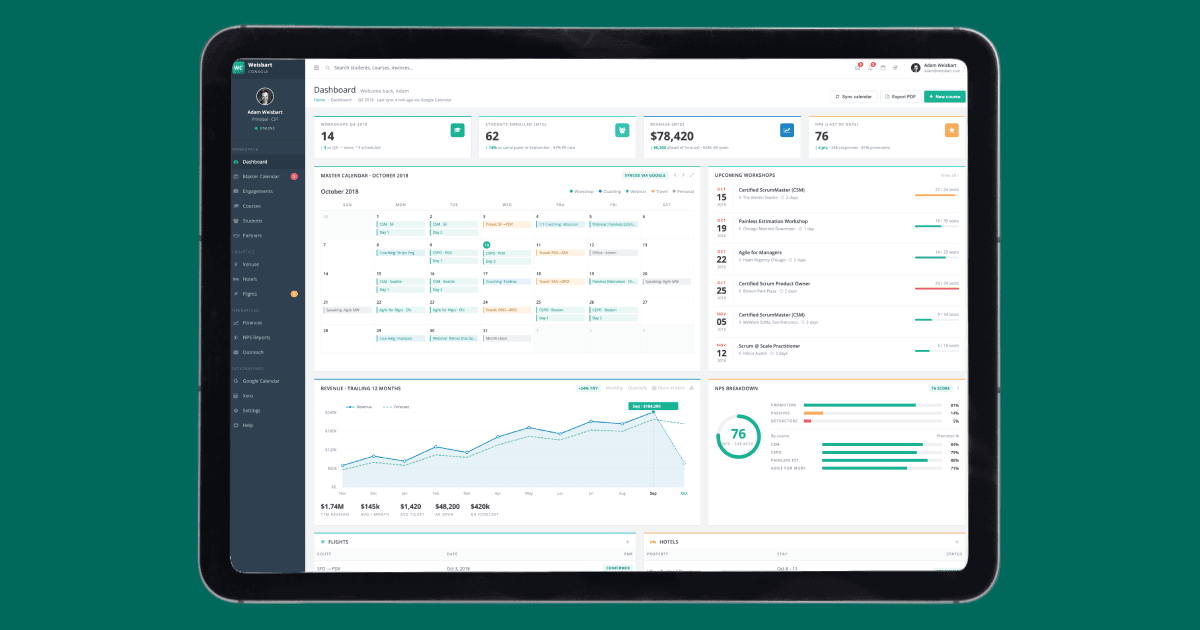
A custom back-office for a one-person training consultancy
Adam Weisbart ran a global Scrum training practice as a sole operator. Danubio built him a custom console where calendars, students, finances, travel, and feedback all lived in one place. He used it daily from 2018 to 2023.
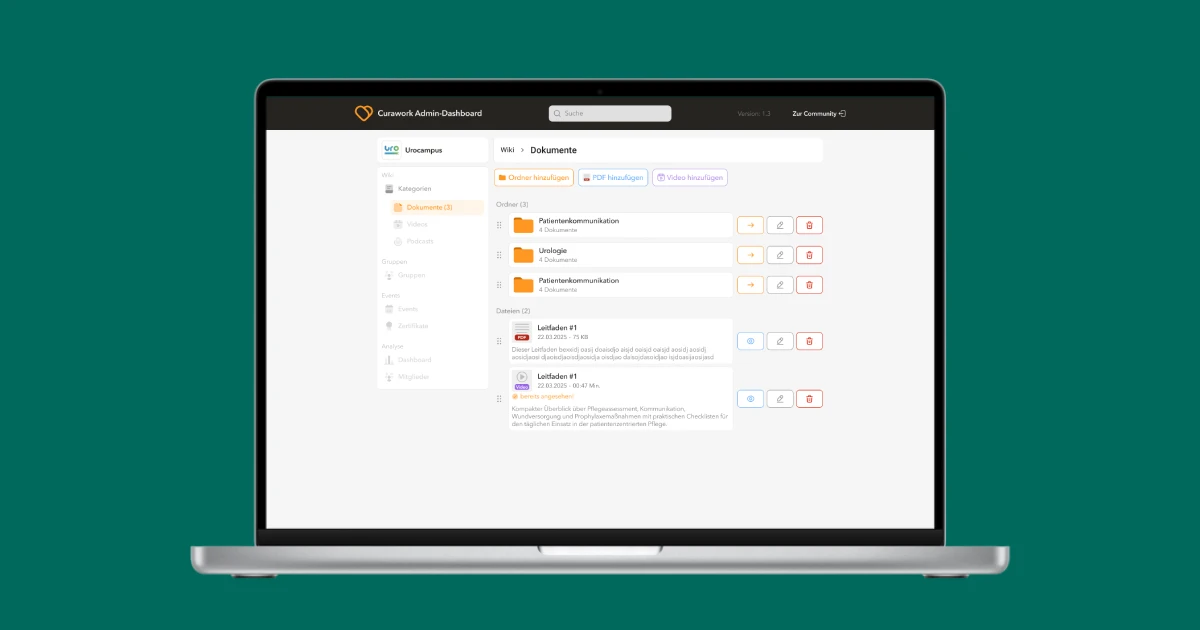
Legacy Code to React: A Feature-Led Approach
How we introduced React into a legacy PHP/JS stack by delivering a fully integrated, high-engagement social feature, laying the groundwork for future modernization without disrupting the existing platform.

Rebuilding a live multi-tenant platform without downtime
CORE Home was live with pilot brokerages when Danubio took ownership of the stack. The rebuild migrated tenants one at a time onto a stronger foundation, with no cutover and no broken clients. The same platform now carries 5,000+ tenants across web and mobile.
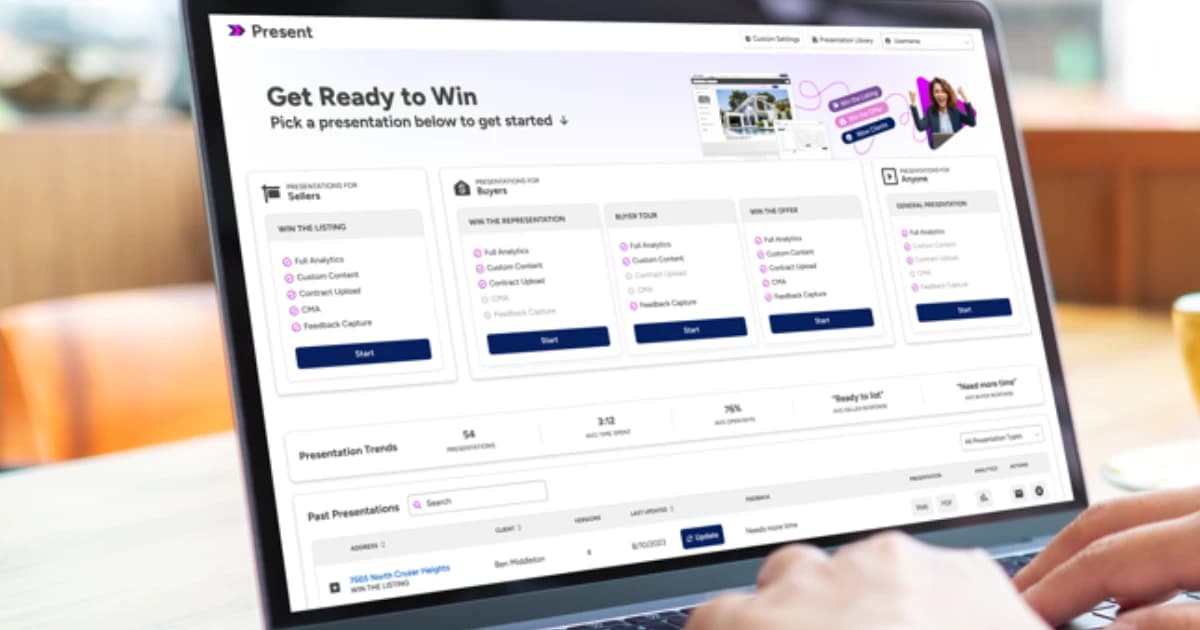
Scaling an acquired SaaS to 350K enterprise users
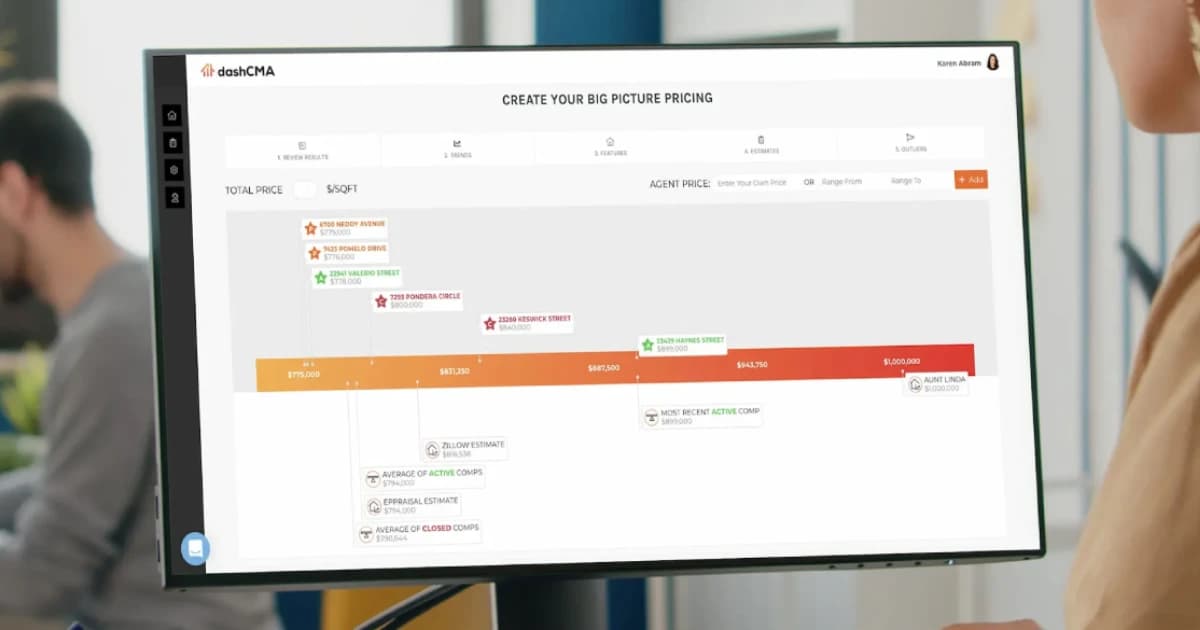
Inside Real Estate acquired dashCMA in 2020 and kept Danubio on as the engineering team. Five years and 1M+ presentations later, the product is used across major national brokerages, including RE/MAX, eXp, and Berkshire Hathaway HomeServices.
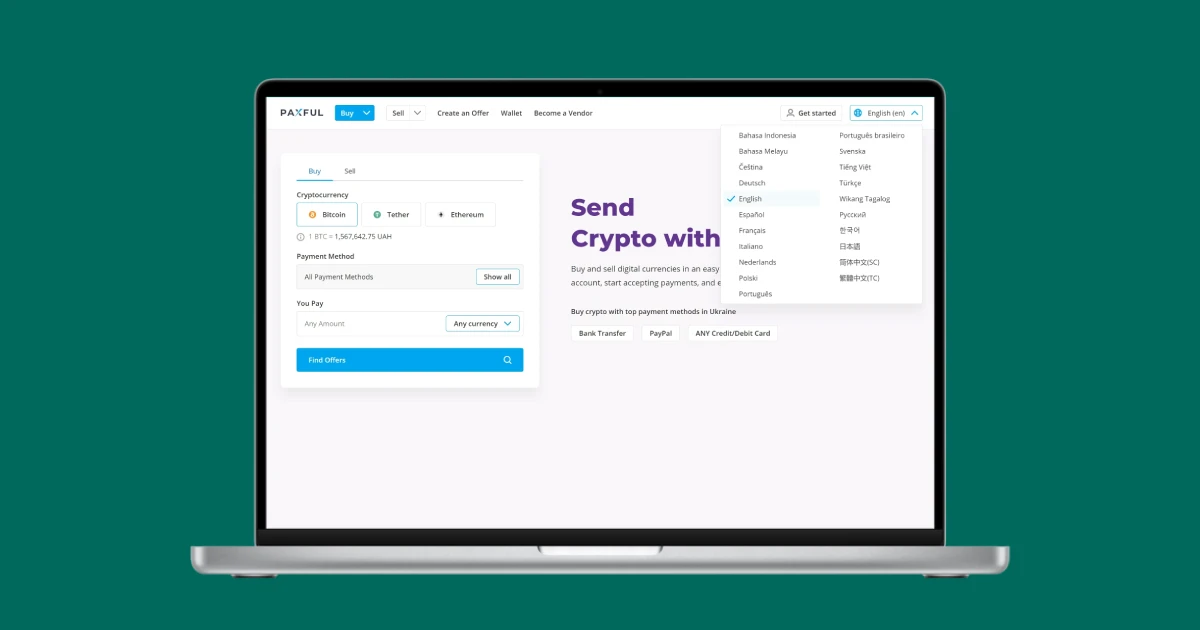
Internationalizing a crypto marketplace to 40+ languages
Paxful was a peer-to-peer crypto marketplace operating globally. Over two years, Danubio built its localization layer - externalization, locale-aware formatting, RTL, and a Crowdin-backed release pipeline - that took the platform to 40+ languages.
From a founder’s vision to acquisition in 18 months
How a founder-led PropTech product moved from first build to acquisition, with Danubio acting as the engineering team behind the product.
Current with the modern React ecosystem, not just the framework.
What the engagements actually use, end to end. Versions track current; we work on the latest stable React releases and keep older codebases moving toward them.
Application core
- React 19
- TypeScript, strict mode
- Next.js, App and Pages Router
- Vite and Turbopack
- Vitest and Testing Library
- Playwright for end to end
UI and design systems
- Tailwind CSS
- shadcn/ui and Radix UI
- Headless UI patterns
- Framer Motion
- Storybook
- Design tokens and theming
State and data
- TanStack Query and SWR
- Zustand and Jotai
- Redux Toolkit
- React Hook Form
- Zod schema validation
- Server Actions and RSC
Operations
- Vercel, Netlify, Cloudflare Pages
- Sentry and LogRocket
- Web Vitals and RUM
- Bundle analysis
- Accessibility tooling (axe-core)
- Visual regression with Playwright
The way Danubio approaches React work.
Principles that shape every React engagement, drawn from the work the team has shipped.
Senior-led, every engagement.
The engineers writing React for a Danubio client are the engineers who have shipped React into production for years. No training-on-the-job at the client's expense, and no component patterns lifted from a starter template.
Production data drives UI work.
Performance and architecture decisions are anchored to real user metrics. Web Vitals, bundle analysis, render profiling, and slow-device traces come before opinions about what is slow.
Component contracts before component code.
New components start with clear prop boundaries and state ownership. The investment up front prevents the API thrash that makes design systems decay.
Type-safe end to end.
TypeScript on the front, typed contracts at the API boundary, schema validation on data crossing trust boundaries. Errors caught at compile time stay out of production.
Tests as a ratchet.
Unit tests with Vitest, integration with Testing Library, end-to-end with Playwright. Coverage moves up over the engagement, not down.
React, answered
When is React the right choice for a product?
React fits products with rich, stateful interfaces: dashboards, multi-step workflows, real-time updates, complex filtering, and role-based UIs. The component model keeps large interfaces tractable as they grow, and the ecosystem has proven answers for the hard parts. For mostly static, content-driven sites, a lighter setup can be the better call.
Can you modernize a legacy frontend to React without a full rewrite?
Yes, and incrementally is usually the right way. We introduce React alongside the existing code and migrate feature by feature, keeping the product shippable throughout. On one legacy PHP/JS platform we did exactly this: shipping a fully integrated React feature first, then using it as the groundwork for wider modernization.
React or Next.js?
Next.js is React with a framework around it: routing, server rendering, and data-fetching conventions. We reach for Next.js when the product benefits from SSR, SEO, or React Server Components, and for plain React with Vite when it is a client app embedded in an existing stack. The rendering and SEO needs decide it.
A React project on the table?
New build, frontend modernization, performance work, design-system foundations, or a migration to React Server Components. Whatever stage the product is at, we can talk through it.