Mobile apps that belong to the product.
Founders and technology leaders bring Danubio in to build mobile products serious enough to need real engineering. Built to perform under real use and hold up release after release.
What kind of mobile products does Danubio build?
The kind of software where people log in to do real work. A companion app to a SaaS platform, a mobile surface on a system that already exists, a user-facing workflow tied to live data. The screen is one part of it. The APIs, the auth, the notifications, and the release path behind it are the rest.
Cross-platform product apps
One app across iOS and Android, on the same APIs, auth, and data as the rest of the product.
Rebuilt live, zero downtimeAI-powered mobile apps
AI features built into the mobile product, on the same models and data as the rest of the product.
AI Search for 400K agentsNew mobile products
A customer-facing product built from scratch, the app and the system behind it.
Concept to acquisition in 18moOne mobile surface, on the same platform as the web.
The strongest answer to “what mobile does Danubio build” is a mobile product it built into a system that was already running.
HomeSearch AI was the most consequential launch of our year, and the engineering had to hit a date our customers had already heard. Danubio took ownership of it across BoldTrail and CORE Home, scaled the team for the push, and delivered on the date we had committed to.


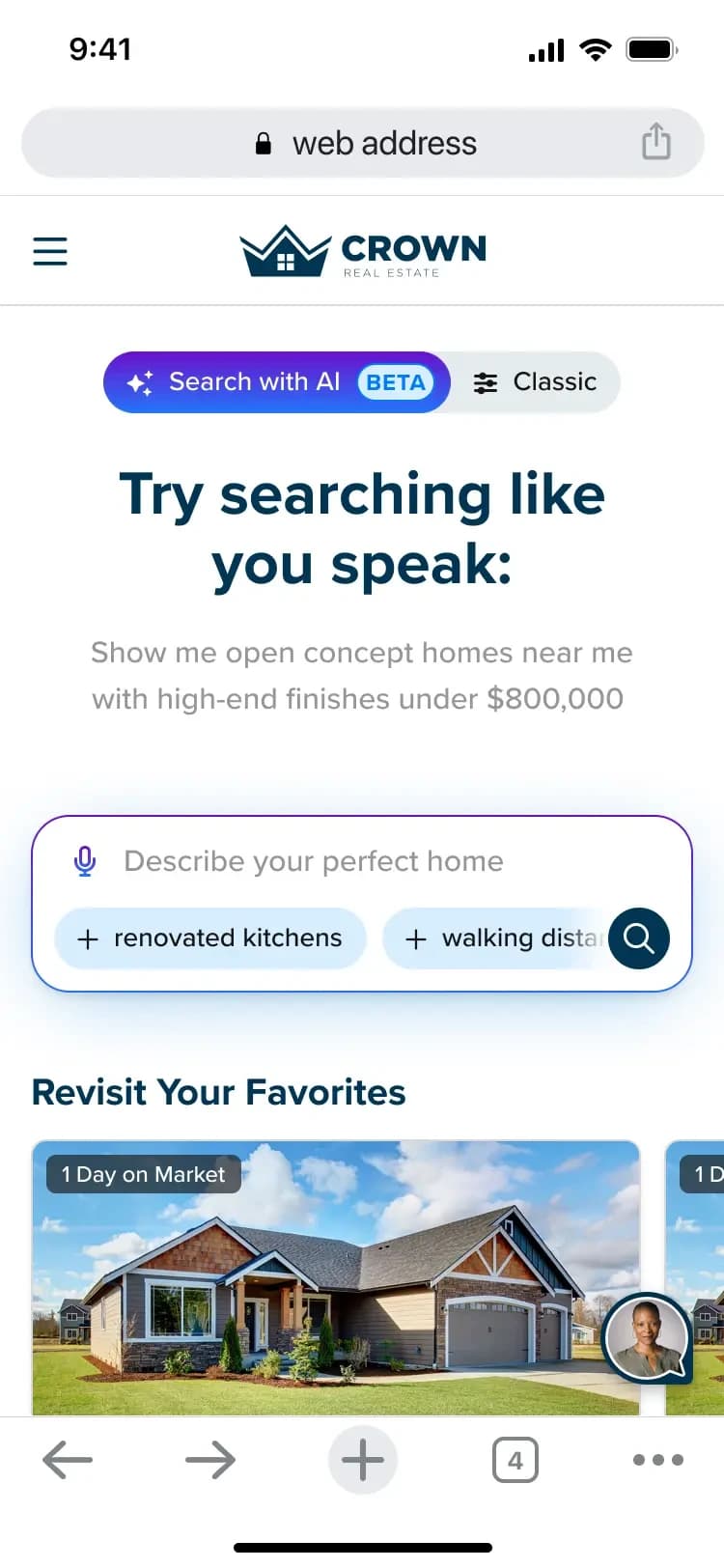
HomeSearch AI, the same product search in your hand.
Inside Real Estate committed publicly to an AI-powered home search across BoldTrail and CORE Home. Danubio built it as one search experience that behaves the same on the web and on the phone, on the same platform, auth, and data, and shipped it to the date customers had already heard.
The mobile search surface and the platform behind it: shared APIs and auth, the search and ranking path, and the release across web and mobile
A public launch date that could not move, 400,000 agents reached, and a mobile experience that had to match the web exactly
More than app screens.
Mobile product engineering at Danubio covers the app and everything it stands on. The same team does the API, the screens that consume it, ships the build that goes to the stores, and stays with the codebase as the product evolves on both iOS and Android.
Mobile product UX and the workflow underneath it
The screens and flows people actually use on a phone: navigation, state, gestures, and the offline and flaky-network behavior that makes a mobile product feel built rather than wrapped.
- Navigation, state, and multi-step flows that hold together
- Offline, retry, and flaky-network behavior treated as part of the build
- Accessibility and responsive layout across phone sizes
- Design partnership when the product needs it
React Native and cross-platform architecture
One codebase that ships to iOS and Android and stays maintainable: navigation, state, native modules where they earn their place, and an upgrade path that does not rot a release behind.
- React Native architecture for products, not demos
- Native modules and bridges where the product genuinely needs them
- A dependency and OS upgrade path that stays current
- A codebase the client team can own and extend
API, auth, and data integration with the platform
The app on the same backend as the rest of the product: shared APIs, the same auth and roles, and data that stays consistent with what the web shows.
- Shared APIs and contracts coordinated with the platform team
- The same auth, roles, and tenancy the rest of the product uses
- Sync and caching so the phone and the web agree
- API work owned end to end when the backend is ours too
Notifications, alerts, and mobile product behavior
Push, deep links, background refresh, and the alerts a mobile product is judged on, wired to real product events rather than bolted on at the end.
- Push and in-app notifications tied to real product events
- Deep links and routing into the right place in the app
- Background refresh and state that survives a cold start
- Permissions handled so users keep the channels that matter
Release quality, performance, and maintainability
Store releases that are predictable, startup and interaction performance measured on real devices, and a codebase the team can keep shipping into.
- App Store and Play submissions that are routine, not an event
- Startup, scroll, and interaction performance measured on real devices
- Crash and error monitoring the team can act on
- Tests and CI where they pay back, not as decoration
Long-term evolution alongside the platform
Most of a product’s life is after launch. Danubio keeps mobile moving release over release in step with the web and the backend, as one product.
- Mobile kept in step with the web and backend roadmap
- OS and store policy changes handled before they break a release
- Continued feature delivery, not a hand-off and silence
- An engagement that can grow into a long-term partnership
The same mobile engineering, across our three solutions.
Senior engineers who own the mobile product and the system it runs on.
Engagements start as a first project and grow as the product evolves. The same engineers stay with the work over time.
Senior ownership
Senior engineers own the app and the platform it runs on: the API contracts, the auth, and the release across the app stores.
Product context
Engineers make each call with the product and the user in mind, beyond the ticket in front of them.
Cross-platform judgment
We weigh React Native, native modules, and a fully native build on the real tradeoffs for your product, then commit to the call.
The team stays with the code
The engineers who ship the first version stay with it release after release. We have owned the engineering on one product for eight years.
Mobile product engineering, answered
Do you build native or cross-platform apps?
Danubio builds both native and cross-platform mobile apps, and the choice follows the product rather than a house preference. React Native is the common starting point when a mobile app should share engineers, patterns, and product logic with the web side, because one team can then move across both surfaces and a feature does not have to be built twice. Fully native, in Swift or Kotlin, is the call when the product genuinely needs it: heavy device integration, demanding graphics or media, or platform capabilities a cross-platform layer cannot reach cleanly. The decision is made against what the app has to do, the team that will maintain it, and where the product is heading, so the architecture still fits a few years out and not only at launch.
Can you build mobile on top of our existing platform and APIs?
Yes. A companion mobile app usually runs on the same backend, authentication, and data as the rest of your system, and Danubio builds it that way deliberately. The mobile surface is treated as part of one product, so it calls the same APIs, respects the same access model, and stays consistent with the web experience as both evolve. That keeps the app in sync with the platform instead of drifting, which is where most companion-app bugs come from: two teams, two sources of truth, and contracts that quietly diverge. When the existing APIs need to change to support mobile well, Danubio can own that backend work too, so the app and the platform move together rather than waiting on each other.
Can you build both the app and the backend behind it?
Yes. Danubio owns the full mobile product: the app itself, the APIs and services it talks to, the data model, and the third-party integrations. When the mobile experience and the platform behind it are built by the same team, the seams between them stop being a source of bugs, because there is no handoff where one side assumes something the other did not build. That matters most for the parts that are easy to get wrong across a client-server boundary: auth and token refresh, offline behavior and sync, pagination and caching, and error states when the network is unreliable. Owning both sides means those decisions are made once, consistently, by engineers who can see the whole path from a tap on the device to the row in the database.
Do you handle app store releases and updates?
Yes. Release and update discipline is treated as part of the engineering work and built in from the start. That covers App Store and Google Play submission and review, versioning and staged rollouts so a bad build reaches a small fraction of users before everyone, and over-the-air updates where the platform supports them for changes that do not require a store review. The goal is to make shipping a new version routine and low-drama, with crash reporting and a rollback path in place so a regression can be caught and reverted quickly. For teams that have been burned by slow or risky releases, getting this pipeline solid early is often one of the highest-value parts of the engagement.
Can you work alongside our existing engineering team?
Yes. Many mobile engagements run with Danubio engineers joining your existing workflows, tools, repositories, and release cadence, working next to an internal team. In practice that means shared standups, pull requests into your codebase, the same review and CI process, and ownership boundaries agreed up front so it is always clear who carries which part of the app and backend. The model adapts to how you already build, so you add senior mobile and platform capacity without taking on a separate vendor process. This works whether Danubio leads the mobile build with your team supporting, or your team leads and Danubio takes a defined slice such as the platform integration or a performance-critical area.
How does an engagement start?
Most mobile engagements start as a focused first project: a senior-led team takes one meaningful piece of the mobile product into production, end to end, then grows into a longer partnership as the app matures. That first scope is chosen to deliver something real on its own, a launch, a rebuild of a fragile screen or flow, or a companion app on top of an existing platform, while giving both sides a low-risk way to work together before committing further. From there the same engineers tend to stay close to the app as it evolves through new features, OS updates, and scale. A typical initial engagement starts within one to two weeks, depending on scope and team availability.
Have a mobile product that needs serious engineering?
Bring a mobile product, a companion app, a React Native surface, or a platform-connected mobile workflow. If the engineering has to be done well, we can talk it through.