The situation
A founder with a real market does not need a longer to-do list. They need someone to own the engineering so they can own the market. That is what we were for dashCMA.
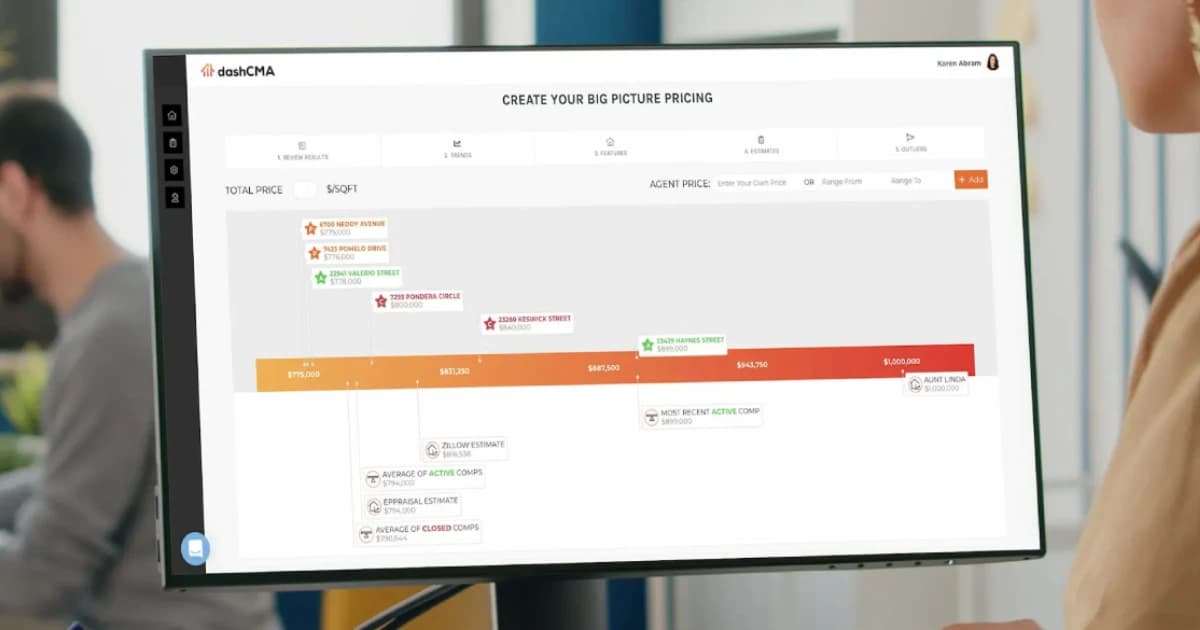
Real estate agents build a Comparative Market Analysis for nearly every listing appointment, and in 2018 the workflow was still paperwork: static MLS printouts and dense reports that made it harder to explain price and timing to a seller. Karen Abram saw the opening and had the industry relationships to test it. What she did not have was an engineering team.
Karen brought more than an idea. She lived in the market, had access to the agents who felt the problem every day, and knew what would make a tool worth switching to. That set the engineering brief: turn a real, understood market opportunity into software that could carry real customers and keep growing. The first version was the foundation of the company, so we built it like one.
We became the de facto engineering organization behind the product: architecture, full-stack development, infrastructure, and the iteration that followed. This is how it went from the first conversation to an acquisition by Inside Real Estate in 18 months, and the decisions that made it acquirable.
Key Takeaways
- A founder with a real market needs an engineering partner who owns the architecture, more than a shop building to spec.
- We shipped the dashCMA MVP in under six months, and reached acquisition by Inside Real Estate 18 months after the first conversation.
- We shipped fast on foundations solid enough that the acquirer expanded the product and kept the team.
- The product is now CORE Present, used by 350,000+ agents.
What does a founder need from an engineering partner?
Ownership. A founder with a real market needs a team that owns the architecture, the delivery, and the trade-offs, so she can stay close to the customer. Building to spec leaves the hardest technical decisions with the founder, the person least equipped to make them.
Karen knew the real estate market cold. She did not need to learn engineering to succeed; she needed engineers who would treat the product as theirs to get right. We owned the architecture and the build while she owned the market and the customer. That division is what let a small team move fast on something that still had to be solid.
A dev shop delivers a spec and hands it back. A founder building the company itself needs a team that carries the product forward and still cares about it a year later. That is the relationship dashCMA ran on.
Three decisions that got dashCMA to market
Three early decisions shaped whether dashCMA would reach agents fast and still hold up later. The full dashCMA case study has the screens and the detail; here is the reasoning.
Narrow the data problem first
US listing data is fragmented across hundreds of regional MLSs, each with its own format and licensing. Chasing national coverage would have burned the runway before a single agent saw the product. We integrated one regional provider with standardized California MLS data: a single clean integration that got real data into the product fast, months ahead of a national build, and kept the architecture ready to expand later.
Design for the listing appointment
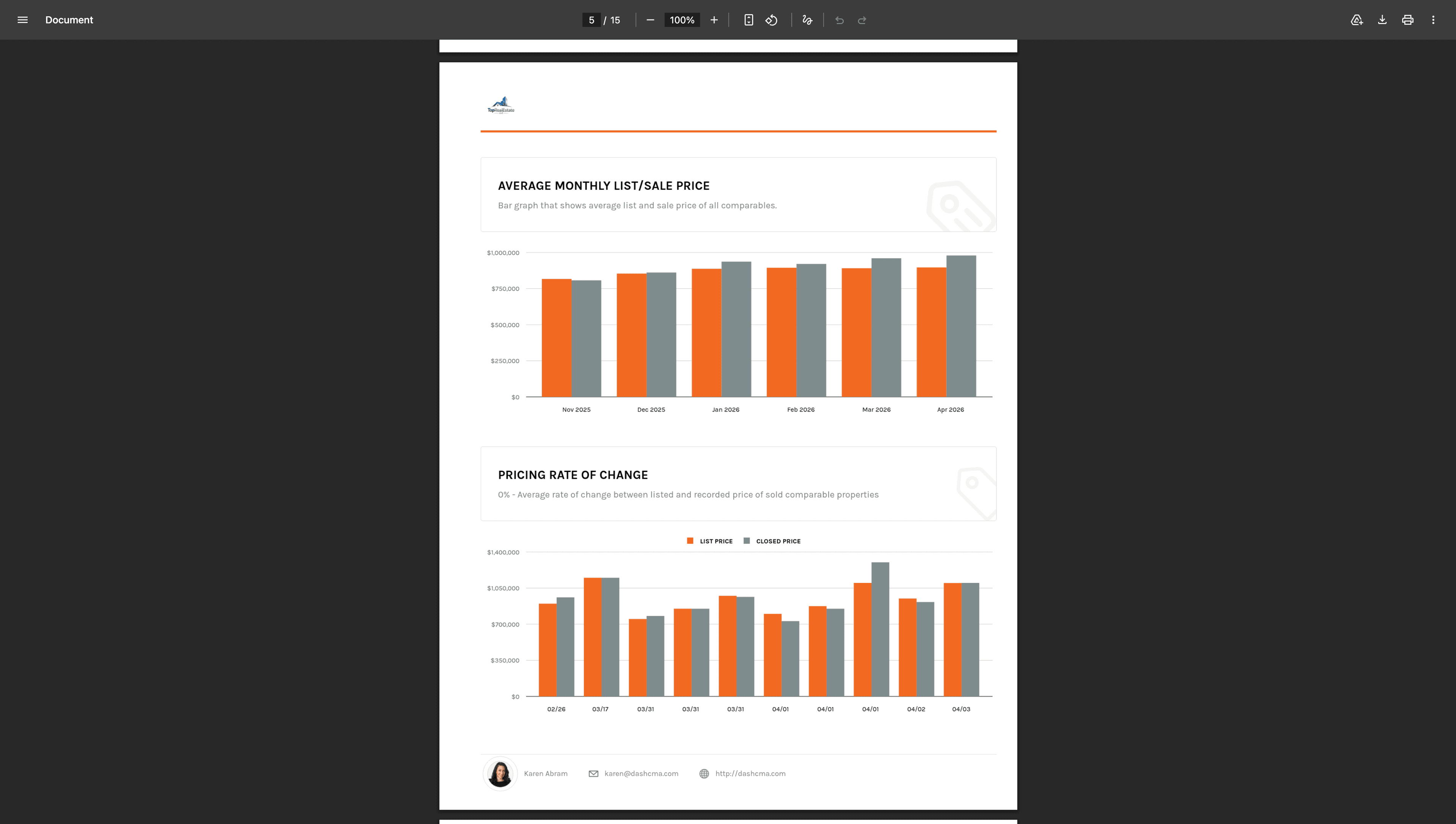
The users were agents, and most were content printing CMA reports from the MLS. A new tool had to be obviously better at the one moment that mattered. We designed for the listing appointment itself: a presentation-ready interface that worked on a tablet, interactive charts that told a pricing story at a glance, and polished PDF outputs an agent could hand a seller.
Ship fast on foundations that hold
The competitive window was real; other teams were circling the same opportunity. A throwaway prototype would have killed momentum at the worst time. We shipped a functional MVP in under six months on foundations solid enough that when Inside Real Estate acquired the company, they kept building on them and kept us on to do the work.
What makes a product acquirable?
Traction plus foundations someone else can build on. dashCMA had agent adoption, industry recognition (Inman called it “compelling” and “fun to use,” with an Innovator Award nomination), and code the acquirer chose to expand rather than rebuild. Those three turned a founder's product into an acquisition.
18 months
First conversation to acquisition
From the first conversation to the acquisition by Inside Real Estate: concept, build, launch, traction, and exit.
The clearest signal came after the deal. An acquirer planning a rebuild keeps the customers and drops the team. Inside Real Estate kept both and expanded the product. The foundations were worth keeping, and so were the people who built them.
“Working with Danubio was like having a world-class technical co-founder on our team. They crafted a beautiful product that our users loved. The fact that we went from a concept on paper to an acquisition in just 18 months says it all.”
What happened next is its own story. The product became CORE Present and grew to 350,000+ agents, with the same team carrying it. We wrote about what eight years on that codebase taught us about acquisitions.
What would we tell a founder starting today?
Own the market, and hand the engineering to people who will own it. Scope the first build to prove the product on foundations that can grow, and ship fast without shipping a dead end.
Timing is the real question. If you are still finding out whether anyone wants the product, stay cheap and experiment. When you already know the market is real, because you live in it the way Karen did, the first version is the foundation of the company, and it is worth building with the judgment and structure of a real product from the start.
That is the work we do when a founder is ready to build something real: we build new products with the teams whose product is the business. The market is the founder's to own. The build is ours.
Frequently asked questions
What does a founder need from an engineering partner?
Ownership. A founder with a real market needs a team that owns the architecture, the delivery, and the trade-offs, so she can stay close to the customer. A shop building to spec leaves the hardest decisions with the person least equipped to make them.
How do you ship an MVP fast without it becoming a dead end?
Scope the hard problem down to what proves the product, and build it on foundations that can grow. We shipped the dashCMA MVP in under six months on a base solid enough that the acquirer later expanded the product and kept the team.
What makes a startup product acquirable?
Traction plus foundations someone else can build on. dashCMA had agent adoption, industry recognition, and code Inside Real Estate kept and built on after the deal. Those three turned a founder’s product into an acquisition in 18 months.
Should a founder hire a dev shop or an engineering partner?
For a product that is the business, a partner who will own the work. A dev shop builds to spec and hands it back; an engineering partner owns the architecture and stays with it as the product grows, which is what a serious product needs.
Sources
- Inside Real Estate acquires dashCMA, Inman, June 30, 2020. Retrieved May 15, 2026. inman.com
- Inman Review: CORE Present transcends category with powerful sales and marketing tools, Inman, September 16, 2021. Retrieved May 15, 2026. inman.com
- Inside Real Estate acquires dashCMA, real estate's hottest new pricing tool, PRWeb, June 30, 2020. Retrieved June 18, 2026. prweb.com

Sava Markovic
Founder, Danubio
Sava founded Danubio in 2018 to be the kind of engineering partner he always wanted on the other end of a critical project: senior, direct, trusted with meaningful product work. He keeps the company focused on strong technical judgment, close client relationships, and software that needs to be done well.
More from this author